
How to Slaughter during War
BREAKFAST BIBLE STUDY
Deuteronomy 20:10-14 (NLT)
1/19/25
“Christian nationalism is just fascism cloaked in religious garb.” – Grace Pecker
10 “As you approach a town to attack it, you must first offer its people terms for peace. 11 If they accept your terms and open the gates to you, then all the people inside will serve you in forced labor. 12 But if they refuse to make peace and prepare to fight, you must attack the town. 13 When the Lord your God hands the town over to you, use your swords to kill every man in the town. 14 But you may keep for yourselves all the women, children, livestock, and other plunder. You may enjoy the plunder from your enemies that the Lord your God has given you.”

Grace came from her bedroom with a smile this morning and a bookmark that was not very deep in one of her study Bibles. I told her she couldn’t use translations I thought had copyist errors. If I don’t like a certain Bible translation, Christian and Grace promise to find the same passage in another version of the Bible.
The Bible has a bunch of different versions in a bunch of different languages because nobody can make up their mind. I told Christian and Grace that the American language would be best for me because I don’t speak any other languages. Grace said American did not even exist when the Bible was written.
Grace also says English did not exist until way after the Bible. English is just American with a funny poof-paw sound in the voice. It’s from England, where they wear fancy suits and stuff and have a king.
Grace has a bunch of Bibles from growing up in the Corners—all in American. Christian and Grace also agreed that whoever led Bible study would not have to cook or clean for the day. I run the farm. Christian and Grace do those chores.
“I hope it’s not sex poetry and stuff this week,” I said. “Last week was hard.”
“No poetry,” Grace said. “This one is about God’s laws concerning warfare.”
“Christian was a Navy SEAL,” I said. “He knows about that stuff. Can he help me?”
“Sure,” Grace said.
“I’m cooking breakfast, buddy,” Christian said. “Sunny-up eggs. I won’t be much help.”
“Oh, I’m sure you’ll chime in,” Grace told Christian.
“How come I feel that this will be more indictment than lesson?” Christian said.
“Like a court case?” I asked.
“Against me,” Christian said.
“Thank you for your service,” Grace told Christian.
“Thank you for your protest work,” Christian told Grace.
“Deuteronomy 20:10-14,” Grace said. “If you were doing this stuff in the Navy, Christian, then, yes, you need to be indicted.”
I opened Grace’s Bible and began to read, “‘As you approach a town to attack it, first offer its people terms for peace.’ Did you do it like that, Christian?”
“We didn’t usually announce ourselves,” Christian said.
“‘If they accept your terms and open the gates to you,’” I kept reading, “‘then all the people inside will serve you in forced labor.’ Is that like slaves?”
“Yes,” Grace said. “I believe this translation might be toned down.”
“Servants in the Bible likely earned no pay,” Christian said.
“How do you know?” I asked.
“I believe,” Christian said, “that in the New Testament, ‘servant’ and ‘slave’ were the same words in Greek. English translators softened ‘slave of Christ’ to ‘servant of Christ.’ I’m not sure about the Hebrew.”
“This is the Old Testament,” I said. “And it says, ‘forced labor.’”
“That’s slavery,” Grace said. “Keep reading.”
“‘But if they refuse to make peace and prepare to fight, you must attack the town. When the LORD your God hands it over to you, use your swords to kill every man in the town.’”
“Not part of our rules of engagement,” Christian muttered.
“Wait,” I said. “If God hands the town over, doesn’t that mean that the army has won?”
“It would seem so,” Grace said.
“So…they don’t take prisoners of war?” I asked.
“Which would be a violation of international law nowadays,” Christian said, “but most of our enemies don’t concern themselves with international law.”
“Keep reading,” Grace said.
“‘But you may keep for yourselves all the women, children, livestock, and other plunder. You may enjoy the plunder of your enemies that the LORD your God has given you.’”
“That, too, is generally how many of our enemies operate,” Christian said.
“I didn’t intend this to get Islamophobic,” Grace said.
“It’s not a phobia,” Christian said. “It’s how terrorists operate. And not just terrorists—state-sanctioned armies—and not just Islamic states.”
“Wait, so, I thought…God says for armies to kill all the men after they surrender and then take the women and children as plunder. What does ‘plunder’ mean?”
“I thought you spent a month as a pirate,” Christian said. “You should know that word.”
“Women and children were viewed as property,” Grace said.
“Still are in parts of the world,” Christian said. “Doesn’t seem like women and children have it so bad here in America, do they, Grace?”
“And I prefer to improve their condition,” Grace said, “especially with orange Jesus back in power tomorrow.”
(Orange Jesus is the code word Grace uses for Trump, which makes no sense to me because Trump acts nothing like Jesus.)
“Not arguing,” Christian said. “I wore the uniform, hoping to protect those values.”
“So, wait, what do they do with the women and children?” I asked.
“Whatever they wanted,” Grace said.
“Bad stuff?”
“Would you like to be taken as a slave?” Grace asked.
“No, thank you,” I said.
“Would Jesus sanction that?” Grace said.
“Oh, no,” I said. “He wouldn’t like any of that.”
“Your best friend, Mr. Manning, wouldn’t,” Christian said, “but Bible Jesus may be another story. He followed the law to the letter. If I recall, the Jesus of the Bible never explicitly condemned slavery.”
“Jesus followed the law not just to the letter but to the iota,” Grace said.
“That’s like a dot. I know that one. Wait, maybe Jesus never read this law?” I said. “They didn’t have printing presses back then.”
“Wouldn’t, of all people, Jesus know his father’s law?” Grace asked.
“Jesus said turn the other cheek and love your enemy,” I said.
“So…maybe it was bad people making up these Old Testament laws and not God?” Grace asked. “What do you think of that possibility?”
I plugged my ears.
“It was just a question, Cole,” Christian said. “It’s okay to ask questions.”
“If God is supposed to be love,” Grace said, “and Jesus said turn the other cheek, what do you think of a passage like the one you just read in Deuteronomy?”
“It’s like opposites or something?” I asked.
“The Bible does seem to contradict itself a time or two,” Christian said. “Deuteronomy, in fact, was a later revision of the older laws written in Exodus, Leviticus, and Numbers.”
“Moses wrote the first five books,” I said. “God told it to him on some mountain.”
“And the fifth book stayed hidden for over a thousand years?” Grace said.
“It did?”
“And wasn’t discovered until under the reign of Josiah,” Grace said. “Why would God hide such important laws for so long only to be found by a high priest?”
“You just made that up,” I said.
“Second Kings,” Christian said. “When the king heard the words of the law, he tore his robes. Grace isn’t making anything up.”
“It was hidden in the church or something?” I asked.
“Or something,” Christian said.
“Likely, it was written during Josiah’s reign and attributed to Moses,” Grace said. “If a king wanted to make legal reforms, what better way than to attribute a new book to Moses! It’s right in the Greek—Deuteronomy—second law. Why would Moses need to write two sets of laws?”
“You guys know a lot about this stuff,” I said. “So…Moses did write two sets of laws?”
“That’s not what attributed means, buddy,” Christian said.
“But what do you think of this particular law about warfare?” Grace asked.
“God really commanded this in war?” I asked. “Kill all the men and take slaves?”
“And people want to teach this in schools,” Grace said. “What do you think of that?”
“Maybe they should just teach about Jesus,” I said. “So, wait, is this the worst thing in the Bible, or are there other bad laws about war and stuff that make women and children slaves?”
“There are many other laws you might not want taught in public schools,” Grace said.
“I wish Jesus would have crossed them out,” I said. “Not just with his crucifixion. I don’t want kids thinking it’s okay to do bad stuff like killing prisoners of war and taking slaves.”
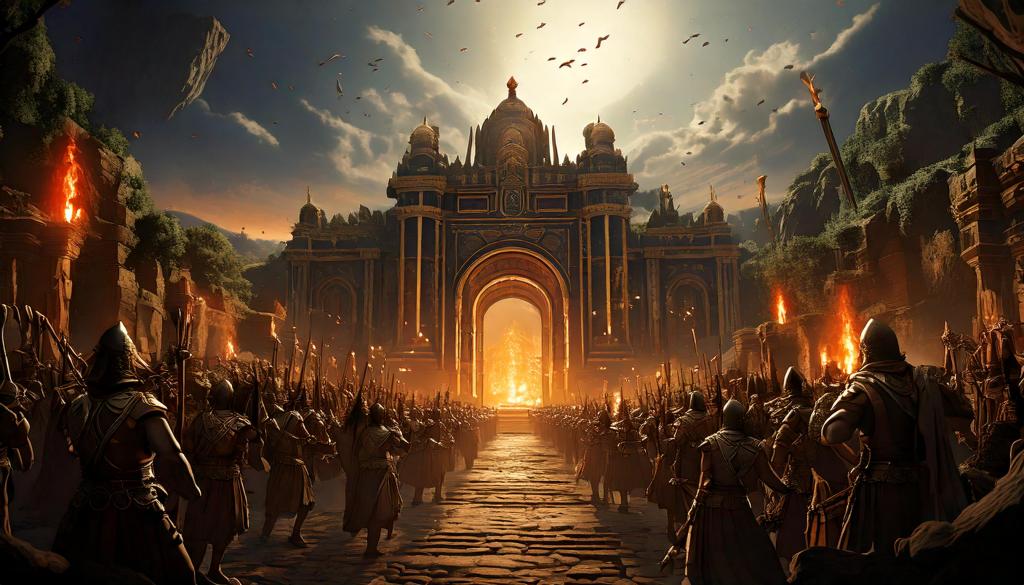
In state legislatures across the country, Christian fundamentalists are passing laws meant to force the teaching of the Christian Bible in public schools. From the posting of textually inaccurate iterations of the Ten Commandments on the walls of classrooms to the incorporation of the “Trump Bible” across multiple pedagogical disciplines, these laws and mandates are sweeping the reddest parts of this nation.
The height of hypocrisy is banning books in the name of “protecting children” while mandating one particular book rife with numerous acts of sexual violence and scenes of graphic violence and genocide.
Book bans are dangerous. The Bible is worth reading and exists online and in public school libraries across the country, but proponents of mandating its formal teaching in public schools need to know what it actually says.
My books about me, my best friend Jesus, and a bunch of other people are below.









© Copyright UNBATED Productions 2025
 The JESUS Journals