
Jesus out of His Mind
Breakfast Bible Study
Mark 3:21 (NIV)
3/30/2025
“Christian nationalism is just fascism cloaked in religious garb” – Grace Pecker

Grace and Christian agreed to pick a passage about Jesus that we could all agree happened. I think the one they pick is pretty neat because it goes Mark Three Two One. Before we opened presents on Christmas, Dad always read the Christmas story from the Bible. Dad always liked to read from the book of Luke, but one time, Christian almost tricked Dad into reading the nativity story from the book of Mark. Dad glanced at the start of the book of Mark and scolded Christian because Jesus does not have a nativity story in Mark. Next year, Christian tried the same thing with the book of John, but that one was the same as Mark. Only Luke and Matthew have nativity stories. One has angels and shepherds and stuff. The other has the three wise men.
“I don’t get it,” I said when I read the passage they picked for this week. “What’s wrong with this?”
“Read it aloud,” Christian said.
“‘When his family heard about this, they went to take charge of him, for they said, “He is out of his mind.”’ Mark 3:21.”
“They thought Jesus was out of his mind,” Grace said. “That’s interesting.”
“Because he was preaching the good news and stuff,” I said. “It was all new to everybody. The teachers of the law didn’t like what he was teaching. When his mom and brothers show up, Jesus says all his friends are his real family. I wouldn’t do that to you guys.”
“Why did they think Jesus had gone out of his mind?” Christian said.
“Because he was teaching the gospel and stuff.”
“Okay,” Christian said, “but they know he’s the chosen one, right?”
“Sure,” I said. “They must not have thought it was safe for him because the law people were plotting against him.”
“That’s a good point,” Grace said. “But they thought he was out of his mind, not in danger.”
“Sure,” I said. “In Mark, he had to keep some of his parables a secret from people.”
“Even his family?” Christian said.
“I don’t think his half-brothers were his disciples,” I said. “James was, but that was later in the Acts of the Apostles. James would have been Jesus’ little brother.”
“So James might have thought he had gone a little crazy at this point?” Christian said.
“Out of his mind,” I said. “Not crazy.”
“Okay,” Christian said. “But doesn’t his mom show up?”
“Yep, Mary,” I said. “She was worried about him.”
“Why?” Grace asked.
“He didn’t even have a chance to eat,” I said.
“That would have made them think he was out of his mind?” Grace asked.
“Probably not,” I said.
“Why would they think he’s gone out of his mind?” Christian asked. “Didn’t an angel come before Jesus was born to tell her how special he would be?”
“Yep.”
“Didn’t wise men and shepherds come to his birth?” Christian asked.
“Yep,” I said. “In Luke and Matthew. Wait, I thought we all agreed on one that actually happened?”
“I believe this happened,” Christian said.
“So do I,” Grace said.
“I don’t get it then,” I said.
“If Mary had all this evidence of how special Jesus would be, if angels came to her, if he was conceived immaculately,” Christian said, “why would she think he had gone out of his mind?”
“It was thirty years later?” I asked.
“She forgot the miracles surrounding his conception and birth?” Grace asked.
“I don’t know,” I said.
“Do the other Gospels have accounts of Jesus’ family thinking he’s out of his mind?” Grace asked. “Or is the moment only recounted in Mark?”
“See, but…don’t they have different eyewitness accounts?” I asked.
“Luke and Matthew have similar stories,” Christian said, “but only Mark has Jesus’ family trying to take him away. You can check for yourself, Cole.”
“How come it’s only in Mark?”
“Well,” Christian said. “Mark was likely the earliest account written. It has no nativity story. As it stands alone, Mark 3:21 makes perfect sense. His family thinks Jesus has gone out of his mind. None of those miracles of his birth happened in Mark.”
“But they happened,” I said. “See, his family was wrong.”
“Luke and Matthew don’t include the account of his family trying to take him away,” Grace said. “They exclude that part, likely because of the birth narratives. In Luke and Matthew, his family knows how special he is. In Mark, not so much.”
“Why not?” I asked.
“They have nativities,” Christian said, “which makes Mark 3:21 a little inconvenient.”
“So, you don’t believe Mark 3:21 happened?”
“It makes sense that it would happen,” Grace said. “It makes sense that Matthew and Luke would exclude that moment.”
“Oh,” I said. “Why?”
“In that time,” Christian said, “births weren’t really all that important unless the person was important.”
“Like Jesus,” I said.
“Exactly,” Grace said.
“What if early followers didn’t really know anything about Jesus’ birth, but they wanted to make his birth seem important?” Christian said. “Is that plausible?”
“We’re saying the nativities are likely fiction,” Grace said.
“Guys,” I said. “It’s the Christmas story. It’s very important. Not fiction. You two promised.”
“Why wasn’t the nativity important to Mark or John?” Christian said.
“Luke and Matthew wrote about it,” I said.
“We’re not trying to upset you,” Grace said.
“Yes, you are.”
“The two nativity narratives don’t even line up perfectly,” Christian said.
“Because of those Roman people,” I said. “I know that one. They weren’t for sure what year Jesus was born, but that doesn’t mean it didn’t happen.”
“The nativity stories were written to impress upon Christians that Jesus was special.”
“Yep,” I said. “He was.”
“We don’t disagree,” Grace said. “I like the two stories, but some of the passages, when compared to the other Gospels, raise many questions.”
“So why can’t this be taught in public schools?” I asked.
“That wasn’t the assignment this week,” Christian said. “Grace and I think that this passage is very believable. This happens in small towns all the time. Nobody likes it when people get too big for their britches. That might be what’s happening with Jesus’ family here. To them, he’s just a laborer. Now, he’s preaching? Jesus even laments that his message is rejected in his own town in another Gospel.”
“Matthew 13:57,” Grace said.
“Kind of like Mr. Manning was rejected around here?” Christian said.
“Oh…”
“Does that make sense?” Grace said.
“I still think you’re trying to trick me,” I said.
“Maybe a little,” Christian admitted. “We believe that Mark 3:21 probably happened.”
“It very well could be that the nativity stories were literary inventions,” Grace said. “That doesn’t mean there wasn’t truth behind them.”
“In the ancient world, fantastic nativities were invented for many important people,” Christian said. “Alexander the Great, who came hundreds of years before Jesus, was said to be the son of Zeus. Zeus impregnated Alexander’s mother with a lightning bolt from heaven.”
“Really?”
“Not really,” Christian said. “Stories like that were common in the ancient world.”
“But Zeus wasn’t real,” I said. “He was like in that one movie with Thor. The one with the girlfriend who was also Darth Vadar’s girlfriend.”
“The movie Thor?” Christian said. “What’s your point?”
“Thor isn’t real,” I said.
“But Vikings believed he was real,” Christian said.
“I thought we were talking about Greeks,” I said.
“Ancient Greeks believed Zeus was real until they started converting to Christianity,” Christian said. “In fact, Greeks were receptive to the Christian message, but centuries passed before Christianity took firm root, long after the earliest Christians were dead.”
“This gave many traditions time to really take hold outside of Israel,” Grace said.
“Well, if that’s how you’re going to be next week, saying bad things about baby Jesus and Christmas, I want to go back to war and sex and all the bad stuff then,” I said.
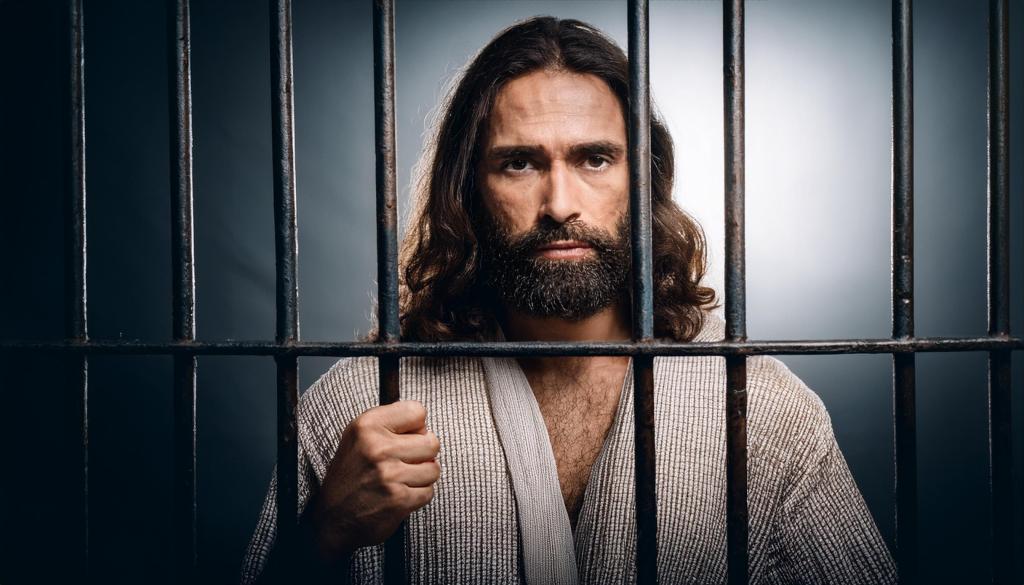
In state legislatures across the country, Christian fundamentalists are passing laws meant to force the teaching of the Christian Bible in public schools. From the posting of textually inaccurate iterations of the Ten Commandments on the walls of classrooms to the incorporation of the “Trump Bible” across multiple pedagogical disciplines, these laws and mandates are sweeping the reddest parts of this nation.
The height of hypocrisy is banning books in the name of “protecting children” while mandating one particular book rife with numerous acts of sexual violence and scenes of graphic violence and genocide.
Book bans are dangerous. The Bible is worth reading and exists online and in public school libraries across the country, but proponents of mandating its formal teaching in public schools need to know what it actually says.
If you are a Christian nationalist, you will probably not like my books. Sorry.









© Copyright UNBATED Productions 2025
 The JESUS Journals