
God Loses a Battle to Chemosh Thanks to Human Sacrifice
BREAKFAST BIBLE STUDY
2 Kings 3:26-17 (NIV)
6/8/25
“Christian nationalists should spend less time seeking power and more time reading the words Jesus preached.” – Christian Pecker
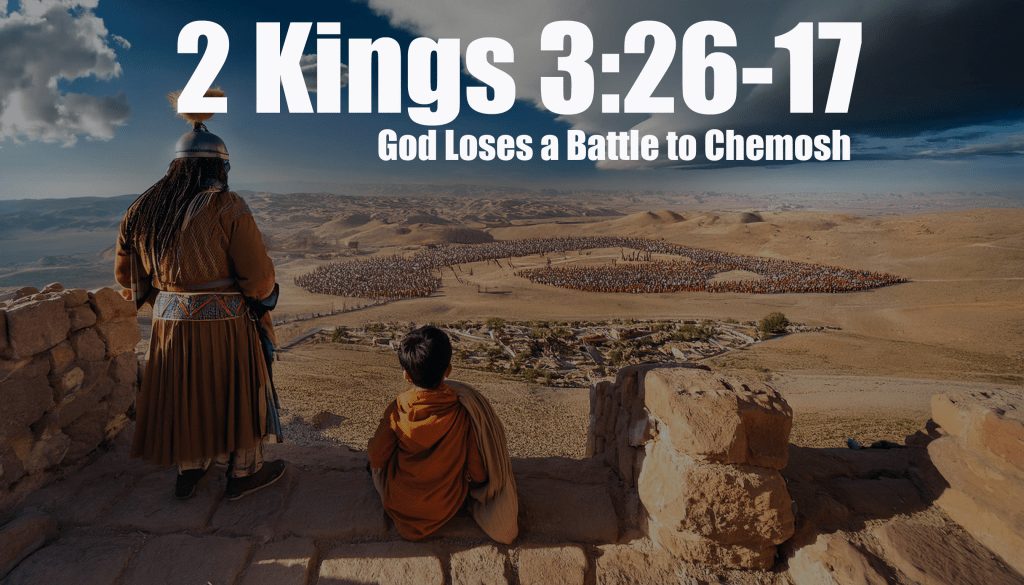
Because I said that the judges weren’t really that holy and that God probably did not want Jephthah to sacrifice his daughter, Christian wanted to do Samson, who sacrificed himself while killing a whole bunch of people. He thinks human sacrifice played a large role in the Old Testament, just like it plays a large role in the New Testament with Jesus. I reminded Christian that Grace needed her turn at breakfast Bible study, hoping she’d pick some dirty Bible poetry and not talk about killing. I reminded them both that God did not like human sacrifice for anybody except Jesus because Abraham didn’t sacrifice Isaac (which Christian says may not be the original version of the story, whatever that means). Grace said she would find other examples of human sacrifice in the Bible this week, which ruined my plan to avoid the killing stuff.
Christian’s post-traumatic stress made me think Grace should not be talking about war stuff in the Bible, but Christian assured me that the biblical stories are far removed from the battles he saw when he was overseas. I still worry about him getting upset, but he told me he knows pretty much all the war stories in the Bible.
“You remember Mesha, the king of Moab?” Grace asked Christian.
“Contemporary of Jehoshaphat, king of the southern kingdom of Israel,” Christian said. “That’s a good one because the events are recorded from the Israelite perspective and the Moabite perspective.”
“The Moabites had a Bible too?” I asked.
“I took an online archeology class,” Christian said.
“I didn’t,” Grace said.
“I might have some perspective,” Christian said. “If I may chime in at some point…”
“What’s the story?” I asked.
“Mesha was the ruler of Moab,” Grace said. “East of the Dead Sea.”
“Were they the ones who came from Lot statutory raping his daughters?” I asked.
“According to Genesis,” Grace said. “Yes. Moab was Lot’s son through his daughter.”
“We did that one.”
“In the third chapter of Second Kings,” Grace says, “Jehoshaphat, king of Judah, Joram, king of Israel, as well as the king of Edom, gathered their forces to bring Moab back under their control.”
“How come?”
“Well, under King Ahab, the Moabites had to pay tribute,” Grace said. “Mesha, the king of Moab, rebelled, so the three armies gathered and marched on Moab.”
“Wait,” I said. “I know this one. Elisha made the water in the valley by praying to God.”
“Do you know what happened next?” Grace asked.
“They had water and fought the Moabite army?” I asked.
“Do you remember who won?” Grace asked.
“God’s people?”
Grace shook her head and passed me her Bible so I could read: “‘When the king of Moab saw that the battle had gone against him, he took with him seven hundred swordsmen to break through to the king of Edom, but they failed. Then he took his firstborn son, who was to succeed him as king, and offered him as a sacrifice on the city wall. The fury against Israel was great; they withdrew and returned to their own land.’”
“So…his army was losing, so he killed son?” I asked.
“Sacrificed his son,” Grace said.
“To God?”
“Not the God of Israel,” Grace said.
“That’s good,” I said.
“What happens next?” Christian asked.
I squint at the page. “The fury against Israel…”
“Was what?” Grace said.
“I don’t get it,” I said.
“What don’t you get?” Christian asked.
“The three armies lost to the Moabite army?”
“Does it say that?” Christian asked.
“Not exactly,” I said. “What does the fury mean?”
“It could be the Moabite army rallied,” Christian said.
“It could mean the sacrifice worked,” Grace said.
“But you just said it wasn’t to God,” I reminded them, “and there’s only one God.”
“All we know is that the three armies had to turn back,” Grace said, “but this could be interpreted as the sacrifice working.”
“It wouldn’t though,” I said.
“Remember how we were talking about how different tribes had different gods,” Grace said, “and each god wielded power in their own territory?”
“But that’s not true,” I said.
“What if the people who wrote this believed it was true?” Christian said.
“They’d be wrong?” I said. “Wait, what god?”
“Chemosh,” Christian said. “He was the warrior god of the Moabites.”
“How do you know that?” I asked.
“Archeological evidence,” Christian said. “And the Bible. Solomon built temples for Chemosh for some of his many Moabite wives.”
“He did?”
“According to the Bible,” Grace said.
“False gods,” I said.
“Maybe so,” Grace said. “But why did the Israelites lose the battle.”
“Bad luck?”
“Is that what the text says?” Grace said.
“You always say none of this stuff existed,” I said. “You said Lot and his daughters was probably a folktale and stuff. So…maybe the Moabites didn’t exist.”
“No, they did, and so did King Mesha,” Christian said. “We have words in stone in the Moabite language dating to the ninth century before Christ. The story on that stone describes how Mesha saves Moab from the Israelites with the help of Chemosh.”
“And it says he sacrificed his son?” I asked.
“The stele doesn’t say that,” Christian said.
“What’s a stele?” I asked.
“A stone inscription,” Christian said. “It doesn’t mention the human sacrifice.”
“But the Bible does,” Grace said.
“So it happened?”
“Not according to the stele,” Christian said, “but it very well could have happened. Child sacrifice was common in that era.”
“Except the Israelites didn’t do that back then,” I said.
“Maybe,” Christian said.
“Wait, which one is true,” I said. “The Moab story or the story in Kings?”
“A stele is in stone,” Christian said. “It’s hard to make changes to words written in stone without chiseling other words out. Accounts on paper can be amended as times change.”
“Like copyist errors?” I said.
“Or reforms,” Grace said.
“Like what?”
“Well, everybody might have sacrificed children at one time, but then the practice fell out of favor,” Grace said.
“Because God said so, except he sacrificed Jesus, but that was to save the world.”
“Archeologists are still looking for evidence of what life was really like back then,” Christian said. “In the Bible, we have the perspective of the Israelites and Judahites…with possible reforms made over the centuries. In the New Testament, we have early Christian perspectives.”
“So…what’s the stone again?”
“Well, that one particular stele offers events from the Moabite perspective.”
“They were wrong.”
“Both accounts,” Christian said, “the stele and the Bible, seem to indicate that the Moabites won that battle.”
“Was God mad at Israel?” I said. “What happens next?”
I started reading the next chapter.
“Wait, it just goes on to a whole new story,” I said. “What does the sacrifice mean?”
“That’s a good question,” Christian said.
“What do you guys think it means?” I asked.
“Well, back then, people believed in tribal gods,” Christian said. “Maybe the perspective back then was that when on Moabite land, Yahweh was not as powerful, so a powerful sacrifice to Chemosh, the god of Moab, gave the king of Moab the victory.”
“But Chemosh doesn’t exist.”
“The Bible doesn’t say that,” Grace said.
“Yes, it does. It says there’s only one God…and Jesus is His only begotten son.”
“That came later,” Grace said.
“Beliefs evolve, Cole,” Christian said.
“How come?”
“People need to explain the world,” Grace said. “Even the New Testament talks about powers and principalities.”
“I’ve heard of that, but I don’t know what it means.”
“It could mean other gods,” Christian said. “The Israelites believed that Yahweh was their god and their god alone. Like all people back then, they were a people tied to their land.”
“Yep.”
“So…that might mean there might have been a belief, albeit a belief that was fading, that there were other gods,” Grace said, “even when Jesus was around.”
“Beliefs evolve,” Christian said.
“This is just one passage,” I said. “Wait, are we still talking about passages that shouldn’t be preached in school?”
“I don’t think Christian nationalists care about these passages,” Grace said.
“But it’s in the Bible,” I said.
“They only want certain parts of the Bible taught,” Christian said.
“Which parts?”
“The parts that affirm their ideology,” Grace said.
“Christianity?” I asked.
“Look at what Jesus preached and see if it lines up with what Christian nationalists teach,” Grace said. “The Bible has many voices. Jesus is interpreted through many voices. Which of those voices line up with the beliefs of Christian nationalists?”
“American Jesus?”
“America wasn’t America when Jesus was around,” Grace said.
“Jesus said turn the other cheek,” Christian said.
“Wait, aren’t the national Christians always talking about fighting and stuff?” I asked.
“Not much of what they preach lines up with what Jesus preached,” Christian said.
“Then they shouldn’t be teaching it and calling themselves Christians.”
“Well, since they claim to follow Jesus,” Christian said, “at the least, they should spend less time seeking power and more time reading the words they claim Jesus preached.”
“And in the meantime,” Grace said. “They should probably keep their ideology out of public schools.”
“And keep out the stele story of Chemosh and the Moabites,” I agreed. “A father who kills his son as a sacrifice to save his people is not appropriate for public schools.”
“With that bit of unintended irony,” Grace said, “I can agree.”
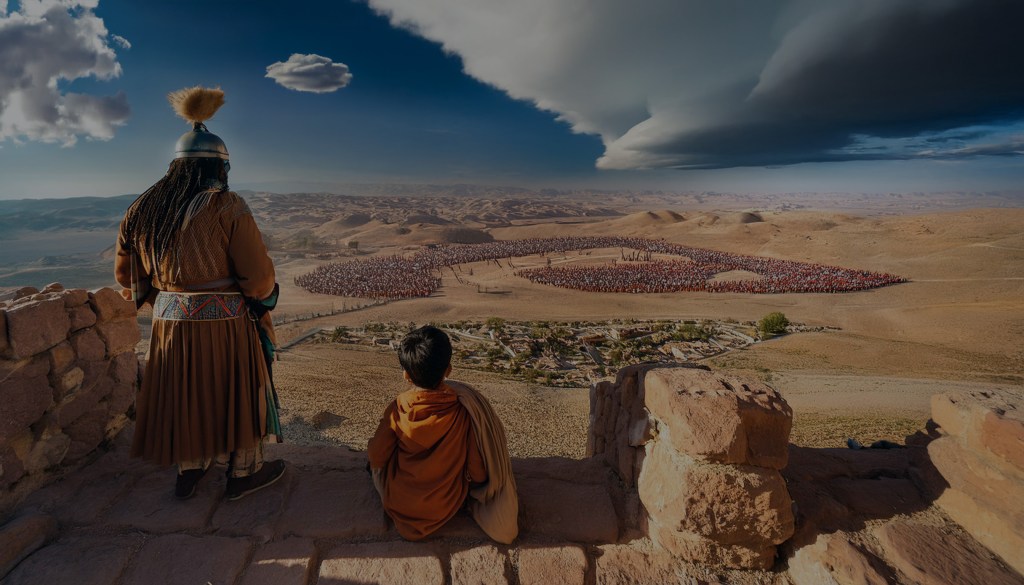
In state legislatures across the country, Christian fundamentalists are passing laws meant to force the teaching of the Christian Bible in public schools. From the posting of textually inaccurate iterations of the Ten Commandments on the walls of classrooms to the incorporation of the “Trump Bible” across multiple pedagogical disciplines, these laws and mandates are sweeping the reddest parts of this nation.
The height of hypocrisy is banning books in the name of “protecting children” while mandating one particular book rife with numerous acts of sexual violence and scenes of graphic violence and genocide.
Book bans are dangerous. The Bible is worth reading and exists online and in public school libraries across the country, but proponents of mandating its formal teaching in public schools need to know what it actually says.
Check out my adventures below. All 12 books are available now.







© Copyright UNBATED Productions 2025
 The JESUS Journals