
BREAKFAST BIBLE STUDY
God’s Mouth Can Make Woes, Calamity, Adversity, Bad, and Evil
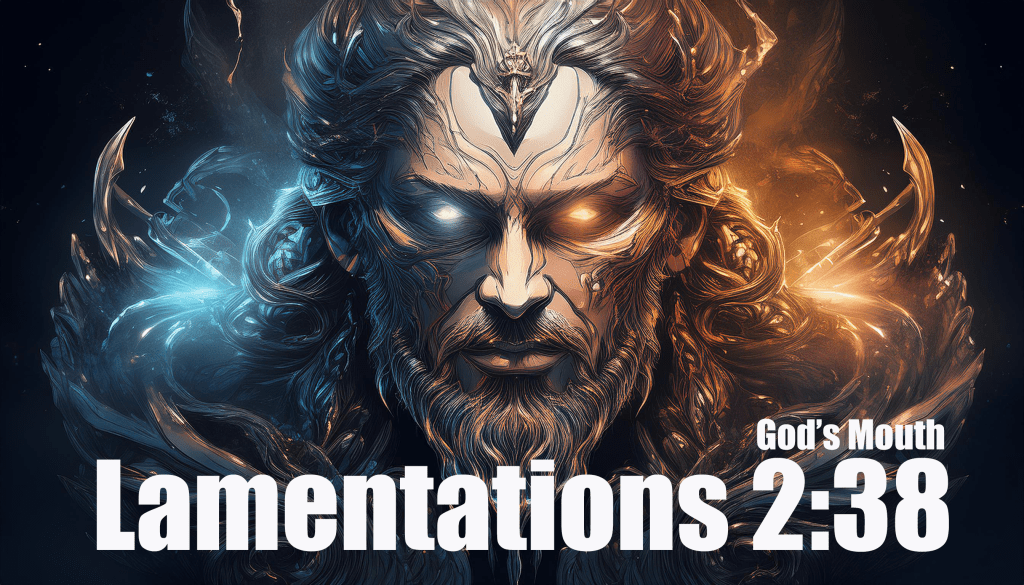
Lamentations 2:38 (ISV)
6/15/25
“Christian nationalists should spend less time seeking power and more time reading the words Jesus preached.” – Christian Pecker
Because I explained to Christian and Grace this week about how the Moabite King winning the battle was probably a coincidence with him murdering his son because Chemosh was probably a demon, I know they are going to show me something else in the Bible that will show me what the text really says, instead of apologetics. I even explained that those kings of Isreal and Judah were sinning, which might have made them lose the battle, even with Elisha’s help, but my siblings just agreed with me and wanted me to table my apologetics until Sunday.
When Christian came to breakfast, he carried his special Navy Bible from when he was in the Navy. This Bible, he claimed, compared the Dead Sea Scrolls and the Masoretic text with all the other old junk, which helped him figure out that people changed the Bible over time because of some sort of renegotiation with the text over changing values, even in the Hebrew language way back in the olden times.
“Neat,” I say, “but I can’t read Hebrew. It’s all chicken scratches to me.”
“This translation is in English,” Christian assured me. “And I only have one passage for you. We went a little long last week.”
“We want to keep it short this week,” Grace said.
“‘Do not both good and evil things proceed from the mouth of the Most High?’” he said.
“No,” I promised him.
Christian pushed the Bible across the breakfast table and pointed me to the text in Lamentations where it said just that.
“Copyist error,” I said.
“This is from two ancient sources,” Christian said.
“Bad translation,” I said and then ran to get all the Bibles in the house, except for the Pecker Family Bible, which was safe in the safe. “I’ll prove it.”
I opened each Bible to show them how most Bibles do not use the word evil. “See, this one says that God makes woes. This one says, ‘calamities.’ Here’s ‘adversity.’”
“The Hebrew word is Hara’ot,” Christian said.
“Who’s she?”
“That’s the Hebrew word,” he said. “It means evil.”
“It does?”
“Probably.”
“So not definitely?” I asked.
“Word meanings change over time, but the word in question is used again, much later, in First Timothy,” he said. “The love of money is the root of what?”
“Evil,” I said. “I remember that one.”
“Hara’ot is the word used in the early Hebrew translations,” Christian said, “though much of the New Testament was first written in Greek, which was the written language of the educated class in the region.”
“You’re saying God speaks evil, which means he makes evil happen,” I said. “Are you sure they’re translating correctly?”
“I’m saying that the author or authors of Lamentations wrote this word in reference to the God Most High,” Christian says. “Elyon.”
“Why?”
“The author probably had no concept of the devil personified as evil,” Christian said.
“Then why are there all these other words instead of evil to describe God in the other Bibles?” I asked.
“Evil is a troublesome word when describing an all-powerful, loving God,” Christian said. “People have altered the translation to fit their theological ends. In doing so, they have changed the original intent of the author. I venture to guess that the translation that uses the word ‘evil’ most aligns with the most ancient of texts.”
“I like the other translations better,” I said.
“I’m guessing Christian nationalists might agree,” Grace said.

In state legislatures across the country, Christian fundamentalists are passing laws meant to force the teaching of the Christian Bible in public schools. From the posting of textually inaccurate iterations of the Ten Commandments on the walls of classrooms to the incorporation of the “Trump Bible” across multiple pedagogical disciplines, these laws and mandates are sweeping the reddest parts of this nation.
The height of hypocrisy is banning books in the name of “protecting children” while mandating one particular book rife with numerous acts of sexual violence and scenes of graphic violence and genocide.
Book bans are dangerous. The Bible is worth reading and exists online and in public school libraries across the country, but proponents of mandating its formal teaching in public schools need to know what it actually says.
Check out my adventures with Christian, Grace, and a bunch of others below.






© Copyright UNBATED Productions 2025
 The JESUS Journals