
BREAKFAST BIBLE STUDY
The Other Gods Died
Psalm 82 (ESV)
6/22/25
“Christian nationalists should spend less time seeking power and more time reading the words Jesus preached.” – Christian Pecker
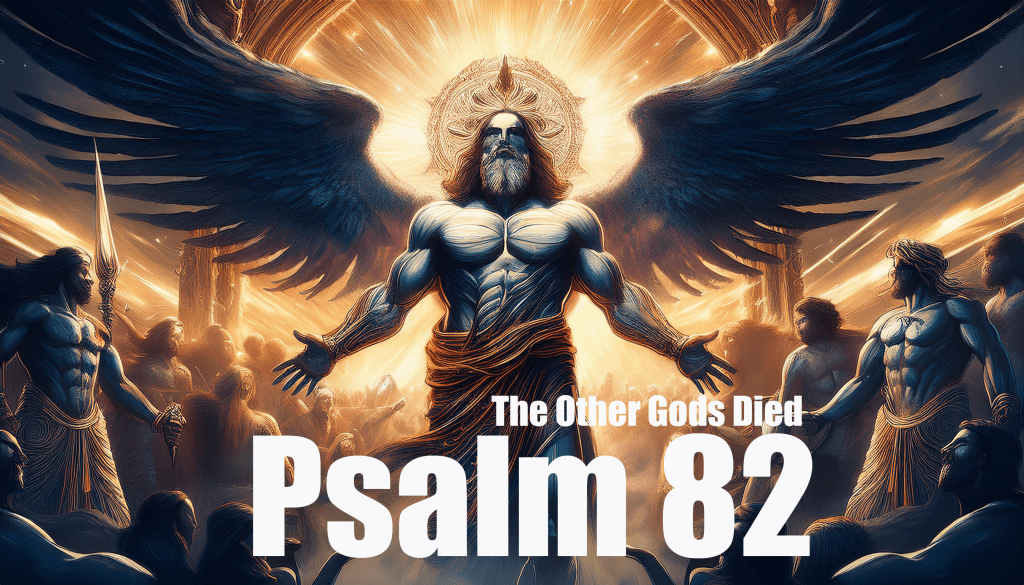
This week, Christian and Grace made me read a whole psalm because I kept talking about how they were wrong about different gods for different tribes and stuff. I went to church and asked Pastor Komen, and he said that even if they found archaeology that suggested people were worshiping false gods, those gods never existed. He said that even the people in Old Testament times would have known those were false gods, not to be worshiped, and when they forgot, God punished them. This is the psalm Christian and Grace show me to try to prove that Pastor Komen is wrong about his apologetics.
Psalm 82
A Plea for Justice
A Psalm of Asaph.
God has taken his place in the divine council;
in the midst of the gods he holds judgment:
“How long will you judge unjustly
and show partiality to the wicked? Selah
Give justice to the weak and the orphan;
maintain the right of the lowly and the destitute.
Rescue the weak and the needy;
deliver them from the hand of the wicked.”
They have neither knowledge nor understanding;
they walk around in darkness;
all the foundations of the earth are shaken.
I say, “You are gods,
children of the Most High, all of you;
nevertheless, you shall die like mortals
and fall like any prince.”
Rise up, O God, judge the earth,
for all the nations belong to you!
“What’s the story behind the psalm?” Grace asked me when I finished reading.
“My Bible puts “gods” in quote marks,” I said. “I think it was just a cinnamon for false idols or something. Your Bible forgot the quotation marks.”
“I don’t think it’s a synonym or metaphor,” Grace said.
“Quotation marks? That sort of punctuation didn’t exist when this was written,” Christian said. “The words were just squeezed together. The quotation marks used in your translation are a slippery bit of apologetics. The Hebrew word they used for God and the gods is some variant of Elohim. It was most likely a word that changed meaning over time as the concept of God changed.”
“I think they mean angels or something,” I said.
“I believe they had other words for angels or messengers of God,” Grace said.
“Malak,” Christian said.
“Who’s he?” I asked.
“That’s the ancient Hebrew word for angel,” Christian said, “or better still, messenger.”
“So, what’s happening here,” Grace said, “where the word malak isn’t being used?”
“God is in Heaven, talking to the angels, who could be like hosts or something?” I said. “They weren’t doing messages on Earth. They were in God’s castle. God thinks the angels are being unfair. They should be helping people with messages and help and stuff. You think these angels are other gods, based on your translation. Which…wait, how can angels die? Doesn’t he tell them that they will die?”
“That’s a good question,” Christian said. “For that matter, how can gods die?”
“Other gods aren’t real,” I said.
“Maybe angels aren’t real either,” Grace said.
“That’s not true,” I said. “I’ve seen one.”
“Okay,” Grace said. “So, what’s the point of God needing to rise against injustice?”
“People were being wicked to Israel,” I said. “God sometimes let that happen.”
“They were a small nation,” Christian said, “oppressed by far more powerful nations.”
“Yep,” I said. “What does Saleh mean?”
“Unknown,” Christian said. “That word could be a musical notation.”
“Those are hard,” I said. “How come they didn’t use punctuation?”
“I don’t know. Thrift?” Grace said. “Papyrus was not cheap, I’m guessing.”
“But my Bible has ‘gods’ in quotes,” I said.
“That’s because modern translators wanted to minimize the word,” Grace said. “Other translations don’t even use the word god. They may use ‘judges’ or ‘hosts.’ In the end, it is the supreme God, El, who judges those gods and sentences them to death. That’s the story being told.”
“How do you know?” I said.
“Know what?” Grace said.
“That the translators added punctuation to change the meaning,” I said.
“The earliest quotation marks can be dated back to the ancient Greeks, not Israel,” Christian said. “Those marks were used to denote speech, not with sarcasm or irony, just plain-old speech. Quotation marks that implied sarcasm or irony didn’t come about until well after the printing press was invented. That’s how quotation marks are being used in your translation, to tell you that ‘gods’ doesn’t really mean ‘gods’.”
“Other gods are inconvenient for modern translators who believe there is only one universal god,” Grace said. “Ironic punctuation solves that problem of other gods, but ironic quotation marks are late editions to the Bible, added by modern translators to hide the original intent of this psalm. Ancient people believed in multiple gods.”
“Other gods don’t exist,” I said.
“That’s what you believe,” Grace said. “That’s what you’ve been taught.”
“You believe in more than one god?” I asked.
“I might believe in one less god than you,” Grace said. “I don’t know.”
“Wait, one less than one is…”
“You don’t need to count that on your hand, Cole,” Christian said.
“It’s zero,” I said. “Wait, you don’t believe in God?”
“I’ve seen no evidence any gods exist,” Grace said, “but I don’t know.”
“But you could go to Hell,” I said.
“That’s quite the loving God that would send me to Hell,” Grace said.
“Wait, even if the psalmist thought there was more than one god, the psalmist said God would kill the other gods. That means we’re only left with one god—the God—even though I still think the gods are really angels. One way or the other, we only have one God now.”
“That’s an interesting interpretation,” Christian said. “So, Cole, tell me, if God killed all the angels or other gods, what were you seeing when you claimed to see an angel?”
“I was in a coma,” I said. “I don’t know. Maybe a demon.”
“Or maybe it was just a dream,” Grace said.
“Can’t we do fun stories?” I said. “We haven’t done a lot of them.”
“Like what?” Christian said.
“There’s a whole bunch we did in Sunday school—Daniel and the lion’s den, Samson, David and Goliath, Noah’s ark.”
“How did Goliath die?” Christian asked.
“Slingshot to the head—Bam!”
“Are you sure?” Christian asked.
“David had a sling,” I said. “You can’t tell me that isn’t true.”

In state legislatures across the country, Christian fundamentalists are passing laws meant to force the teaching of the Christian Bible in public schools. From the posting of textually inaccurate iterations of the Ten Commandments on the walls of classrooms to the incorporation of the “Trump Bible” across multiple pedagogical disciplines, these laws and mandates are sweeping the reddest parts of this nation.
The height of hypocrisy is banning books in the name of “protecting children” while mandating one particular book rife with numerous acts of sexual violence and scenes of graphic violence and genocide.
Book bans are dangerous. The Bible is worth reading and exists online and in public school libraries across the country, but proponents of mandating its formal teaching in public schools need to know what it actually says.
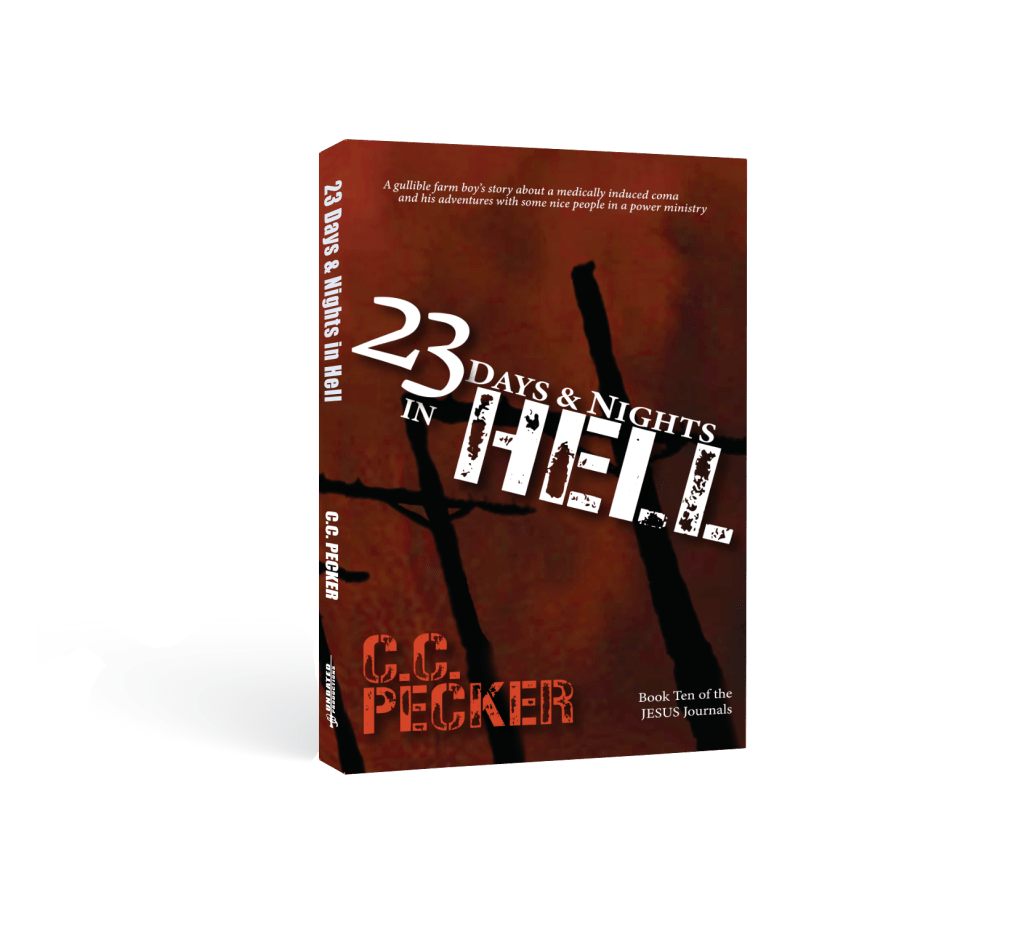
Check out my adventures with Christian, Grace, and a bunch of others below.





© Copyright UNBATED Productions 2025
 The JESUS Journals