
BREAKFAST BIBLE STUDY
Samson Tortures Animals to Torch Fields
Judges 15: 3-5 (NIV)
10/26/25
“Christian nationalism is about power, nothing more.” – Christian Pecker

As Christian and I walked through the shelterbelt this week to pick up trash blown in from the road, I told him about all the good times I had with my fox. I also tell him that I wish I could find another fox to raise but that I hope not to find one that is injured. When he knocked on one of the trees to find out if it was dead enough for firewood, I told him I could get the chainsaw ready.
“I haven’t been working out enough,” he said. “I think I’ll swing the ax.”
“You want to be strong like Samson again?” I asked.
“I did think that was a great story growing up,” he said.
“You don’t now?” I asked.
“He’s not much of a role model,” Christian said.
“Wait, I always thought he was,” I said.
“He was an ancient legendary figure, just like Hercules, with superpowers and terrible flaws,” Christian said. “I liked the superhero part. That’s about all that can be admired.”
“But he prayed to God and saved a bunch of people,” I said.
“Whom did he save?”
“Um.”
“Um?”
“He’s a pre-figure of Christ or something,” I said.
“You sure about that?”
“He sacrificed himself to stop the Philistines,” I said, “and that made it safe for the other Israelites.”
“Did it?” Christian asked.
“I don’t know.”
Now, because of our talk in the shelterbelt, for breakfast Bible study, Christian finally picks a fun story for us to read. Because I don’t like tricks, I reviewed all three chapters in Judges about Samson to get ready, but with all the killings Samson committed, I knew I would not find any explanations Grace would like. I only hoped that Christian would team up with me for once.
“Samson, huh? The story is about cycles of revenge,” Grace said when she sat down with us for breakfast, “and perhaps a cautionary tale about marrying foreign women.”
“Like Delilah,” I said. “She tricked him.”
“It’s not a plausible story,” Christian said. “It’s a poetic myth. I still like the story, but I certainly don’t take it as literally as we were taught growing up.”
“Poems can be about real people,” I said.
“Delilah asks Samson three times how he achieved his strength,” Christian said. “He lies three times. He avoids getting trapped three times. And finally, he reveals the secret on her fourth attempt, correct? Did he not know that she was setting him up the fourth time? Was he really that stupid?”
“Or that horny?” Grace asked.
“I thought he was a hero,” I said. “You guys don’t think so?”
“The Philistines held power in the region during the Late Bronze Age collapse and Iron Age,” Christian said. “Samson represented the struggle against the Philistines, who controlled the southern coastal regions. That conflict, indeed, existed, but superhero Samson is mythic.”
“He was the twelfth judge,” I said. “Twelve is an important number.”
“Which attests to the fictional nature of the story,” Christian said. “Or, at the least, the shaping of a broader narrative at a much later date than when these events were said to occur.”
“Huh?”
“These were folktales that were collected in the book of Judges,” Grace said. “Samson is just like Hercules. He fights a lion. He performs great feats of strength. Through a modern lens, the acts of Samson aren’t that admirable or Christlike. Thousands of years ago, maybe, but Samson was not one to turn the other cheek…which is supposed to be a key Christian value.”
“He prayed to God to get his strength back after they cut his hair,” I said.
“And with the strength of his tribal god, he killed thousands of people,” Grace said. “The Philistines were depicted as awful, but Samson wasn’t such a swell guy either.”
“I thought he defended Israel,” I said.
“When his first wife reveals the secret of his riddle, what does he do?” Christian asked.
“Oh, yeah, he kills them or something,” I said.
“No, he makes good paying off his bet by killing thirty men in another town and stealing their clothing,” Christian said. “He kills random people to steal from them.”
“Oh.”
“When he tries to come back for his wife after his father-in-law has given her to another man,” Christian said, “what does Samson do?”
“Is that where he trains the foxes to carry torches?” I said. “He burns their fields, right?”
“That’s not how the text reads,” Grace said.
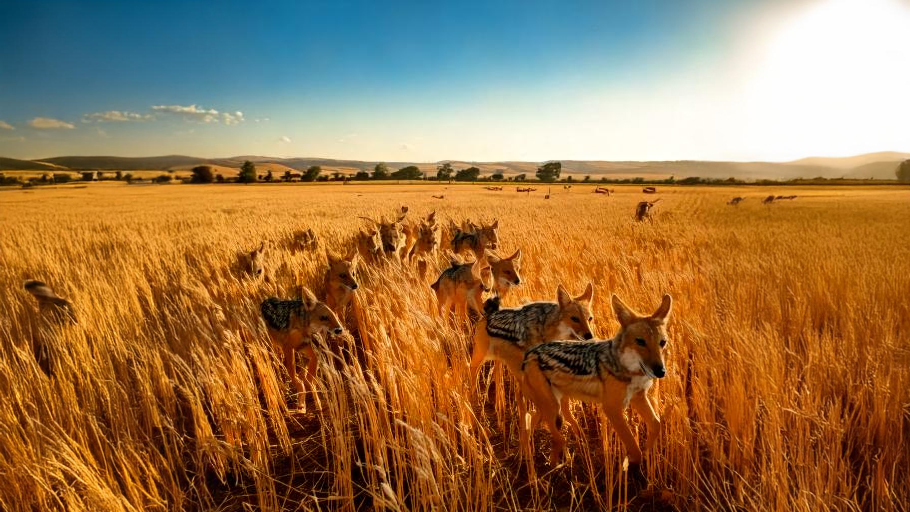
Christian pushed his Bible to me to have me read: “‘Samson said to him, “This time I won’t be guilty when I get even with the Philistines, even though I’m going to do something terrible to them.” So Samson caught 300 foxes. He tied them together in pairs by their tails. Then he fastened a torch between their tails. He set the torches on fire and released the foxes in the Philistines’ grain fields. So he set fire to all their grain, whether it was stacked or in the fields. Their olive orchards also caught on fire.’ See, they had to have been trained to do that.”
“I don’t think the animals are coming out of the fields alive,” Christian said.
“They got burned up?” I asked.
“How does one catch three hundred foxes?” Grace asked.
“Traps?”
“They could have been jackals,” Christian said. “Jackals rove in packs. The fox is a solitary animal. That said, the feat is meant to be fantastical, but it takes more cunning and logistical know-how than strength to pull it off.”
“How did he keep their tails tied together?” I asked.
“Good question,” Grace said.
“How did the torches stay lit?” I asked.
“Another good question,” Grace said.
“It’s not hard to torch fields,” Christian said. “When I believed this story, I rationalized that Samson might have caught jackals. Now, I believe that the animals were foxes. Foxes have tails that look like flames. I believe that the imagery is deliberate, just like all the imagery in the cycle—the bees, the lion, the jawbone of an ass.”
“He killed a thousand people with that jawbone,” I said.
“Who did the counting?” Christian said.
“What your brother means,” Grace said, “is that the numbers were symbolic too.”
“Wait, why didn’t Samson want to be found guilty?” I asked. “Was he afraid he’d be charged with animal cruelty or something?”
“He was being a trickster, not a judge or hero,” Christian said. “If caught, he could blame the animals. I doubt much concern existed for the plight of the animals.”
“But they couldn’t start their own tails on fire,” I said. “Somebody had to be guilty of setting all those animals on fire. They had to know a person did it…not the foxes.”
“See how silly the story sounds when taken literally?” Grace said.
“And he does get caught…or blamed, to be more precise,” Christian said.
“Oh, don’t they kill his wife because of what he did?” I asked.
“And her father,” Grace said. “They burn them to death.”
“That makes them bad people,” I said.
“How many people starved because of what Samson did?” Christian asked.
“Usually, it’s the most vulnerable who starve first,” Grace said.
“But…wait, see, they worshiped false gods,” I said.
“Dagon,” Christian said. “A fertility deity and father to Baal. His name sounds like the Hebrew word for grain. He’s also depicted as a merman and is associated with ‘dag’ or fish.”
“So…when he burned the grain, he was also fighting their fish god who ate grain?” I asked.
“When ancient peoples fought, so too did their gods,” Grace said.
“Much of the imagery in the Samson cycle is solar,” Christian said. “down to Samson’s name—which means sunlight. The sun can bring a good harvest. The sun can also scorch fields.”
“Oh, I didn’t think about that,” I admitted.
“It’s a highly stylized story with fantastic elements,” Grace said. “It’s fine if you believe it’s true, but much of the story is hard for me to swallow.”
“And…Samson is a jerk,” Christian said. “The Philistines are depicted no better, but they’re meant to be the enemy. Samson is portrayed as a hero, but by my standards, he’s just a thug.”
“Oh,” I said. “I guess we can all have opinions.”
“Do you think he should be held up as a Christlike role model for school children? Should his behavior be emulated by those children?” Grace asked.
“Not if he hurt animals to make people starve,” I said. “Can we do a fun story where animals don’t get hurt? I bet there has to be one like that.”
In state legislatures across the country, Christian fundamentalists are passing laws meant to force the teaching of the Christian Bible in public schools. From the posting of textually inaccurate iterations of the Ten Commandments on the walls of classrooms to the incorporation of the “Trump Bible” across multiple pedagogical disciplines, these laws and mandates are sweeping the reddest parts of this nation.
The height of hypocrisy is banning books in the name of “protecting children” while mandating one particular book rife with numerous acts of sexual violence and scenes of graphic violence and genocide.
Book bans are dangerous. The Bible is worth reading and exists online and in public school libraries across the country, but proponents of mandating its formal teaching in public schools need to know what it actually says.
Some themes in my books below might not be appropriate for children.







© Copyright UNBATED Productions 2025
 The JESUS Journals