
BREAKFAST BIBLE STUDY
Bridegroom of Blood
Exodus 4: 24-26 (NIV)
11/23/25
“Christian nationalism is about power, nothing more.” – Christian Pecker

This week, when I was flipping through my Bible, I found a story probably too inappropriate for public schools. I knew that the story had a scary part, but I did not really understand the meaning of the story, so when we were winterizing the barn on one of the last nice days of November, I asked Christian if I could talk about the “Bridegroom of Blood” during breakfast Bible study.
“Sounds like a horror movie, doesn’t it?” Christian said.
“I don’t like that,” I said, “and I don’t get it.”
“I think I know the story,” Christian said. “Circumcision, right?”
“Because God was going to kill Moses,” I said.
“Grace will have something to say about forced female circumcision,” Christian said. “Don’t tell her it has nothing to do with the Bible, even though it doesn’t. She’ll accuse me of Islamophobia and talk about the practice predating the religion. It’ll be a pointless argument.”
“But women don’t have foreskins, do they?” I asked.
“That’s not what’s removed from the female anatomy,” Christian said.
“What is?”
“Google it,” Christian said.
I did.
“Oh,” I said. “Does that hurt?”
“Sex organs have many nerves,” Christian said. “Circumcisions are painful for everybody, but females in particular can have a difficult time with sexual pleasure after female circumcision.”
“How come?”
“Because that’s usually the point of female genital mutilation,” Christian said.
“So women can’t have pleasure?” I asked. “Oh, I bet talking about stuff like that would be a problem in schools.”
“I don’t remember talking about circumcision in sex ed,” Christian said. “We got the abstinence only lecture. By the time you would have gotten to middle school, our school dropped sex ed.”
“How come?”
“We went to a public school, but the answer is the long arm of religion,” Christian said.
“Because people don’t want their kids to have sex?” I asked.
“Getting rid of sex ed doesn’t stop that from happening,” Christian said. “It just increases pregnancy rates and the spread of venereal disease.”
“I know about VD,” I said. “Grace made me learn it. Mom was against me learning anything about that stuff.”
“Well, there was no sex ed thousands of years ago, but people still figured sex out,” Christian said. “Every animal manages to figure out mating. Grace was right. Mom was wrong. You needed to learn that stuff.”
“I know all about that stuff now,” I said. “I just don’t get the story of God almost killing Moses.”
“Let me refresh my memory,” Christian said.
As I learned all about female genital mutilation, Christian relearned the story in Exodus of God trying to kill Moses when Moses goes back to Egypt. I also learned that I was circumcised and wondered how much it hurt. Grace cooked breakfast.
“I think I figured out the context behind story,” Christian said, “but it’s really abrupt, so I could be wrong.”
“God tries to kill Moses because he hadn’t circumcised his son?” Grace asked.
“It made no sense to me,” Christian said, “because God just had a long chitchat with Moses about the mission to free his people.”
“I thought it was because he stopped to take a break on the road,” I said.
“Moses hems and haws,” Christian said. “God gives him a script, tells him Aaron could do the talking for him, and shows him a couple of magic tricks.”
“The miracles of turning his staff into a snake and turning his arm into a leper?” I asked.
“Those are the ones,” Christian said.
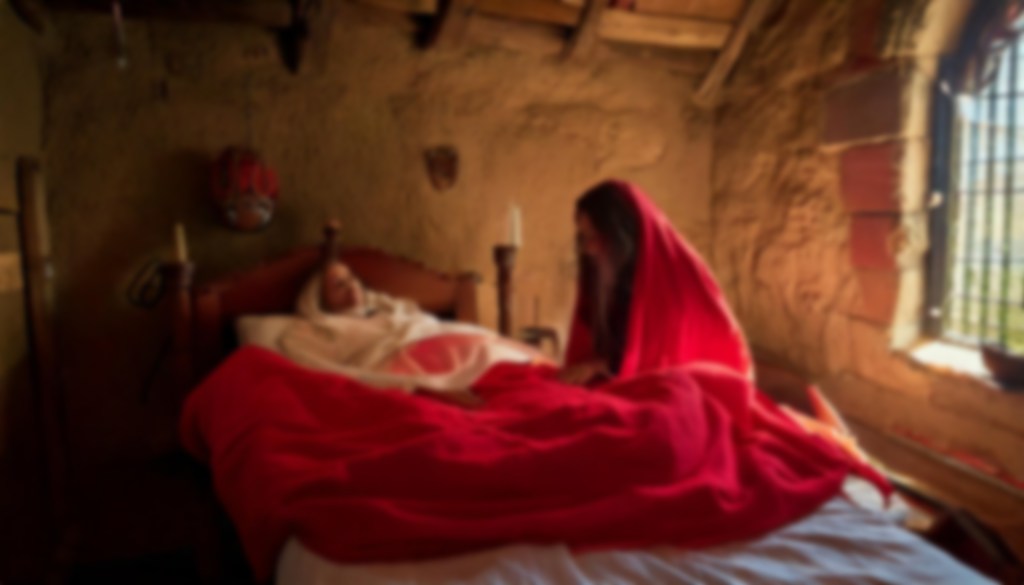
I started to read: “‘As Moses was on his way to Egypt, he stopped at a resting place for the night. The Lord met him there and tried to kill him. But Zipporah took a flint knife and circumcised her son. She took the skin and touched Moses’ feet with it. Then she said to him, “You are a bridegroom of blood to me.” Zipporah said this because she had to circumcise her son. So the Lord did not kill Moses.’”
“It’s pretty clear,” Grace said. “God was going to kill Moses for having an uncircumcised child, so his wife takes care of the task.”
“But why didn’t God remind him to circumcise his child when he told him to go back to Egypt? That would have been the perfect time,” I said.
“Must have slipped God’s mind,” Christian said.
“So…God was going to kill Moses because God forgot to remind him that his boy needed a circumcision?” I asked. “But if God killed Moses, who would lead the people out of Egypt?”
“It’s a weird story,” Christian said. “I think the story is a reminder to the reader to obey the Abrahamic covenant of circumcision. Moses had been living away from his people. If Moses was going to lead Israel home, he needed to obey the covenant of Abraham and have his male children circumcised, just like all Israelites.”
“Maybe,” Grace said. “The episode feels like a late insertion. It doesn’t really fit the rest of the narrative, does it?”
“But wouldn’t it have been easier for God just to remind Moses of the rules?” I asked. “It doesn’t sound fair.”
“Moses might have gotten sick,” Grace said. “Zipporah might have linked his sickness with some sin that needed atonement. She circumcised their son. Moses recovered. That would sort of fit the thinking of ancient people regarding sickness.”
“A trick like that would work if people are ancient?” I asked.
“I’ve never seen sympathetic magic work,” Christian said, “but people have believed in it for thousands of years. That’s what Grace is saying. The ritual saved Moses.”
“I’ve seen angry magic,” I said. “The Miracle Alley man did angry magic, but I pulled off a miracle, thanks to Jesus. It was a good adventure.”
“Just as with your adventures with Talitha, we have no evidence that a mass exodus from Egypt ever occurred.” Grace said. “Egypt controlled Canaan during the time window that most biblical scholars believe Moses existed. In other words, Israel would have been fleeing from Egypt into land controlled by Egypt. It’s an ahistorical story…maybe to encourage people to circumcise their children.”
“Is it a bad story?” I asked. “I mean, like, for children?”
“I don’t know why you would want to teach it,” Grace said. “I don’t see the point.”
“To teach that ritual magic doesn’t work?” I asked.
“Well, in this case, a ritual did work, according to the story,” Christian said. “But remember that we have no evidence other than the Bible that Moses or a mass exodus from Egypt ever happened. Israelites were rural people. Canaanites were city people. No mass exodus happened. Egypt controlled southern Israel during this period. The Hittites controlled the northern region. This was all before the Bronze Age collapse. If not for the Bronze Age collapse, ancient Israel would not be.”
“Why did his wife, Zipporah, touch his feet with the foreskin,” I asked, “and call herself a bridegroom of blood?”
“She wasn’t an Israelite,” Grace said. “Moses was. She performed a violent act on her child. She was probably horrified by what she did to save Moses. It could be as simple as that.”
“The lesson is to have your children circumcised, or else God will kill you?” I asked.
“That’s about it,” Christian said.
In state legislatures across the country, Christian fundamentalists are passing laws meant to force the teaching of the Christian Bible in public schools. From the posting of textually inaccurate iterations of the Ten Commandments on the walls of classrooms to the incorporation of the “Trump Bible” across multiple pedagogical disciplines, these laws and mandates are sweeping the reddest parts of this nation.
The height of hypocrisy is banning books in the name of “protecting children” while mandating one particular book rife with numerous acts of sexual violence and scenes of graphic violence and genocide.
Book bans are dangerous. The Bible is worth reading and exists online and in public school libraries across the country, but proponents of mandating its formal teaching in public schools need to know what it actually says.
Some themes in my books below might not be appropriate for children.







© Copyright UNBATED Productions 2025
 The JESUS Journals