
BREAKFAST BIBLE STUDY
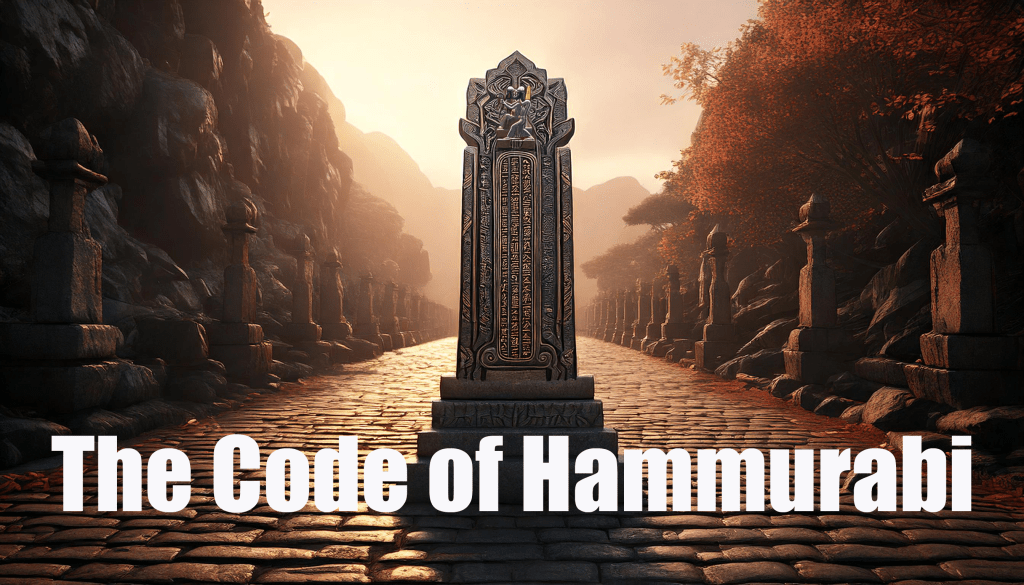
The Code of Hammurabi
11/30/25
“Christian nationalism is about power, nothing more.” – Christian Pecker
Since Grace and Christian are stocking up on a shopping trip for December and are away during our normal breakfast Bible study, I go to church to do Bible study there. I hope the Bible study is about Jesus, but the Bible study is about Leviticus, which has a whole bunch of laws and punishments that I do not like. Since Christian and Grace are always worried about me making a scene, I wait until after class to ask my questions.
“Did Moses and his priests really kill all those people for breaking the law back then by worshiping false idols and stuff?” I asked.
“They turned from the God that saved them,” Pastor Komen said. “Now we have Jesus, who shows mercy. Nobody but Jesus could perfectly obey the law. That’s why his sacrifice was necessary. We needed him to atone for our sins.”
“Yep, and he also changed the laws that weren’t good,” I said.
“You mean like when his disciples were eating in the fields on the Sabbath?” Pastor Komen asked. “He wasn’t exactly changing the laws.”
“Nope, not one iota,” I agreed. “That’s what the scribes did, sometimes with copyist errors, sometimes with, um, some sort of renegotiation with the prophets of old or something, when the scribes had to rewrite it all on fresh paper. That’s why the Bible has a bunch of mistakes, especially when it came to the laws that weren’t fair.”
“Well, I’d beg to differ,” Pastor Komen said. “Our God is a just God. His law was perfect.”
“Christian says that some of the laws came from before Moses wrote them down,” I said.
“He must be referring to the Code of Hammurabi,” Pastor Komen said. “There are some similarities, but those were civic codes, not divine law.”
“Who’s Hamberalli?” I asked.
“Hammurabi was a king,” Pastor Komen said. “The reason there were similarities between his code and the law of Moses was because people tend to commit the same crimes everywhere.”
“Christian also says some of the laws weren’t written until way after Moses died. I’m not sure which is true.”
“We believe that Moses heard the word of God,” Pastor Komen said.
“Yep,” I said. “Even if there’s no archaeology that says Moses existed. Even though archaeology also says that Egypt ruled the Promised Land and most of the Israelites were already there and never had to exodus.”
“Well, archaeology does get fuzzy, kind of like photos out of focus,” Pastor Komen said, “but the accounts of Moses in the Bible are detailed and true.”
“That’s what I told Christian,” I said. “I’m going to ask him about that King Hamburger guy.”
“Hammurabi,” Pastor Komen said.
When I call Christian on my drive home, he sounds a little annoyed but asks if everything is okay on the farm.
“I think so,” I said. “I’m coming home from church.”
“Oh, great,” Christian said.
“I bought funny socks for you and Grace,” I said.
“Funny socks?”
“Yep, Pastor Komen said it was a good idea,” I said. “See, President Trump was using the R-word again, which isn’t good, so this one company called him out. They make funny socks. Pastor thought it would be good to buy some funny socks to help the company in case Trump tries to ruin them like he tries to ruin all small businesses with his bad policies.”
“You didn’t sell the farm, though?” Christian asked.
“The socks weren’t that expensive.” I said. “So…um…who was King Hammurabi?”
“Who told you about him?” Christian asked.
“Pastor Komen,” I said. “It’s different than the socks. That was another conversation.”
“What did he tell you?”
“That his laws were mostly civil, not like the Bible.”
“The stele on which the Code of Hammurabi is written depicts an image of Shamash,” Christian said, “the god of justice, handing the law down to Hammurabi, similar to how God handed down the law to Moses.”
“Oh, Pastor Komen didn’t tell me that.”
“The Code of Ur-Nammu came centuries before the Code of Hammurabi. Both are much older texts than anything in the Bible. In both cases, these laws were written by people who claimed that the gods inspired them. That claim gave them legitimacy.”
“Pastor Komen didn’t mention any of that,” I said.
“Did he also tell you that Mosaic law parallels the Code of Hammurabi in many places?” Christian asked.
“Because people commit the same sins everywhere,” I said.
“Did he tell you that many of the laws were written in the same order?” Christian said.
“They were?” I asked.
“You can read them in parallel and see that one set of laws borrows from the other.”
“King Hamburger must have borrowed from Moses somehow.”
“Scholars can only guess when Moses existed,” Christian said. “Those guesses span hundreds of years, but nobody says Moses lived before Hammurabi or Ur-Nammu.”
“Maybe he did.”
“Not according to the genealogies found In the Bible,” Christian said.
“Oh,” I said. “Maybe God gave laws to those other people.”
“And then they ascribed them to their own gods?” Christian asked.
“Yep,” I said. “I bet that’s why Moses had to write them down again to get them right.”
“Unlikely.”
“Maybe the older laws were prefigured for Moses like Jesus was prefigured with Samson,” I said. “But King Hamburger was worshiping false gods, and that made God angry.”
“Couldn’t it just be that these laws were widespread and crossed cultural lines?”
“Only if they came from Moses first,” I said.
“That’s not possible,” Christian said. “Look it up for yourself.”

In state legislatures across the country, Christian fundamentalists are passing laws meant to force the teaching of the Christian Bible in public schools. From the posting of textually inaccurate iterations of the Ten Commandments on the walls of classrooms to the incorporation of the “Trump Bible” across multiple pedagogical disciplines, these laws and mandates are sweeping the reddest parts of this nation.
The height of hypocrisy is banning books in the name of “protecting children” while mandating one particular book rife with numerous acts of sexual violence and scenes of graphic violence and genocide.
Book bans are dangerous. The Bible is worth reading and exists online and in public school libraries across the country, but proponents of mandating its formal teaching in public schools need to know what it actually says.
Some themes in my books below might not be appropriate for children.






© Copyright UNBATED Productions 2025
 The JESUS Journals