
BREAKFAST BIBLE STUDY
Children Praised Jesus
Psalm 8:2; Matthew 21:16 (NIV)
1/18/26
“From the lips of children and infants
you, Lord, have called forth your praise.”– Jesus
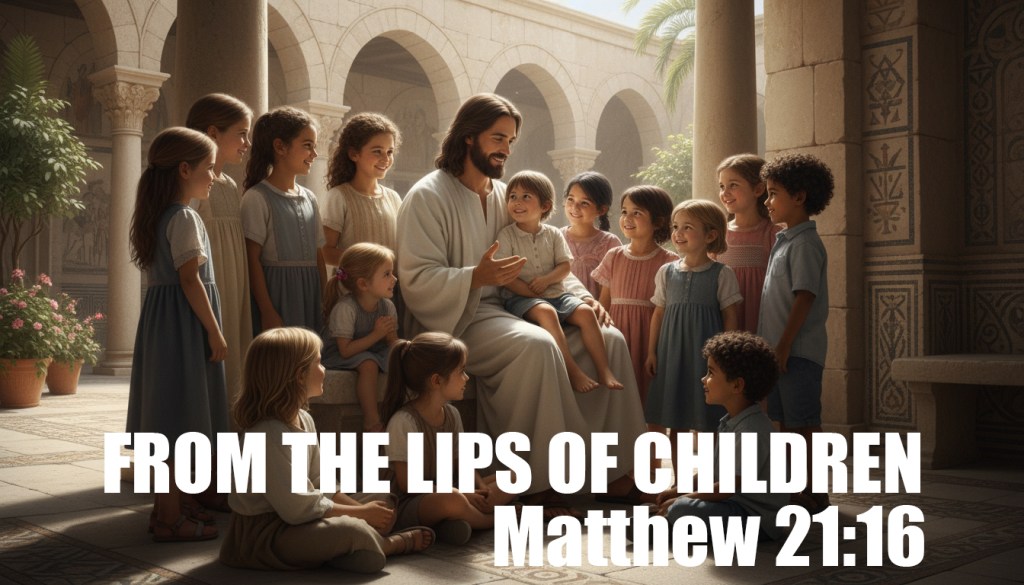
I woke Christian up this morning to show him proof that Jesus fulfilled prophecy when he was in the temple and quoted Psalm 8:2. He pulled the Bible from my hand and hid it under his pillow to continue sleeping. I shook him awake and told him I would go wake up Grace.
“Let her sleep,” he said.
“But I found the prophecy you can’t say isn’t prophecy.”
“Psalm 8?” he muttered.
“Yep,” I said. “It’s about children praising Jesus. The priests get sore at that. Jesus reminds them of what Psalm 8 said about the fact that children would praise him.”
“Jesus knew the Book of Psalms,” Christian said. “Matthew knew the Book of Psalms. Kind of. Matthew might have been putting words in Jesus’ mouth. He doesn’t even get those words right. All that said, can’t you let me sleep?”
“It doesn’t talk about sleeping, except the disciples fall asleep later, when Jesus was praying before he got captured.”
“No, can you let me sleep, Cole?”
“I got excited.”
Christian sat up in bed, pulled out the Bible, and opened the book to Psalm 8. “Cole, please read the passage in context. Who is Psalm 8 praising?” he said.
I read the psalm again.
“Jesus?”
“Does it say, ‘Jesus’?”
“Not exactly.”
“Who is it praising?”
“God.”
“Yes,” Christian said. “Matthew is having Jesus quote one passage in a psalm, a psalm that has similarities to Egyptian and Mesopotamian songs of worship. Matthew takes great liberty in rephrasing Psalm 8 to fit his theological purposes.”
“Egyptians and Meso-ta-nonanes worshiped Jesus, too?”
“Egyptian and Mesopotamian people worshiped their own gods,” Christian said, “but the writing has similarities due to the migration of ideas across cultures.”
“About Jesus?”
“No,” Christian said, “Matthew is trying to convince the reader that Jesus is God’s son. He digs through Old Testament scripture to make his case.”
“But Jesus does a bunch of healing after driving out the moneylenders,” I said.
“The miracles are a different story,” Christian said. “Miracles are one thing. Prophecy is another. Matthew was writing long after Jesus died.”
“Yep,” I said. “People told him what happened. Eyewitnesses.”
“But Matthew didn’t convince many Jewish people,” Christian said. “The message spread through the Greek world because they were more receptive to the idea of a spiritual savior. The people of Israel at the time were hoping for an earthly messiah who would save them from Roman oppression. Those who were looking were looking for a hero who would restore Israel to its old glory.”
“But what Jesus did was better with going to Heaven and stuff,” I said.
“So you say because you’ve never been oppressed,” Christian said.
“Yes, I have.”
“Cole, you can believe what you want,” Christian said, “but I don’t see Psalm 8 as prophetic. These were ancient songs of praise to God. Jesus isn’t mentioned.”
“But Jesus quoted them,” I said. “Are you saying that Jesus lied?”
“Cole, if I say I knew who was going to win the Super Bowl last year, would that make me prophetic?” Christian said. “If I quote the score after the game as proof that I knew in advance—”
“You picked the wrong team in the Super Bowl last year,” I said.
“Let’s pretend I picked the Eagles like you did. Would that make me prophetic?”
“No, that’s just a guess.”
“Okay, if I quote from the Bible, does that make me a prophet?”
“You’re not.”
“If I told you that I guessed the outcome of the game after the fact, would that make me a prophet?” Christian asked.
“Only if you wrote it down before or something,” I said. “Wait, just like the Old Testament. They wrote the prophecies down way before Jesus was born. Matthew found them all.”
“Matthew was writing decades after Jesus died,” Christian said. “He scoured the Old Testament, looking for anything that could read like prophecy. Psalms are songs. If you want them to be prophetic, fine…but they seem too vague to be prophetic to me. I’m more interested in how Psalm 8 compares to other ancient texts written much earlier, and right now, I’m not interested at all. I just want to get a few more minutes of sleep.”
“I’ll find another one then for two weeks from now,” I said. “I’ll prove it to you, but first, you have to pick something good from the Bible that Christian nationalists wouldn’t like.”
In state legislatures across the country, Christian fundamentalists are passing laws meant to force the teaching of the Christian Bible in public schools. From the posting of textually inaccurate iterations of the Ten Commandments on the walls of classrooms to the incorporation of the “Trump Bible” across multiple pedagogical disciplines, these laws and mandates are sweeping the reddest parts of this nation.
The height of hypocrisy is banning books in the name of “protecting children” while mandating one particular book rife with numerous acts of sexual violence and scenes of graphic violence and genocide.
Book bans are dangerous. The Bible is worth reading and exists online and in public school libraries across the country, but proponents of mandating its formal teaching in public schools need to know what it actually says.
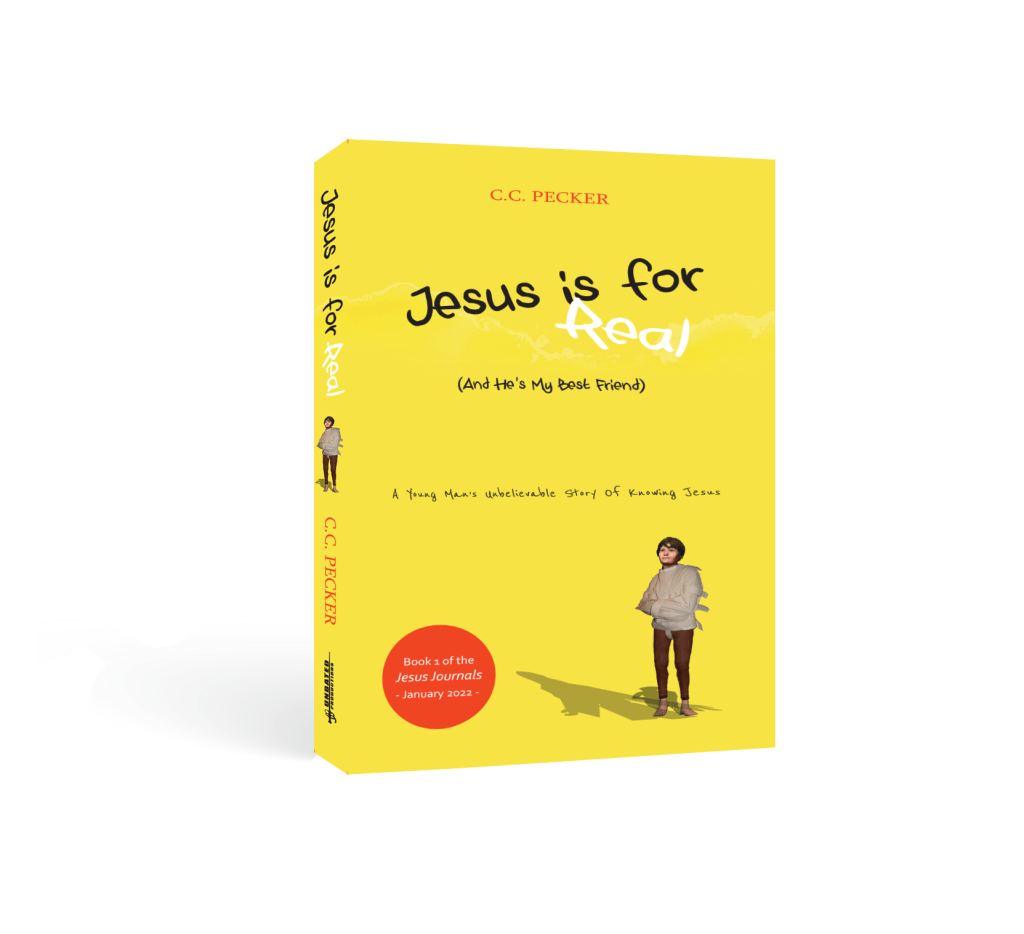
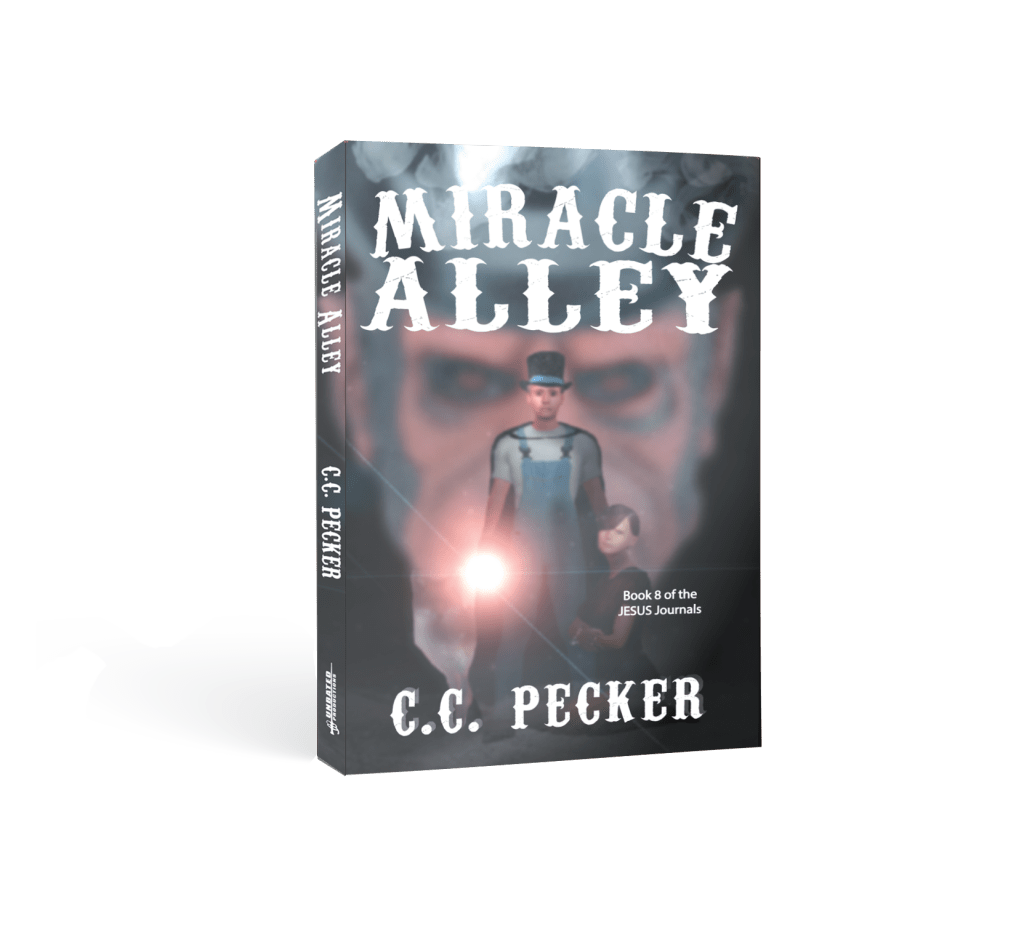
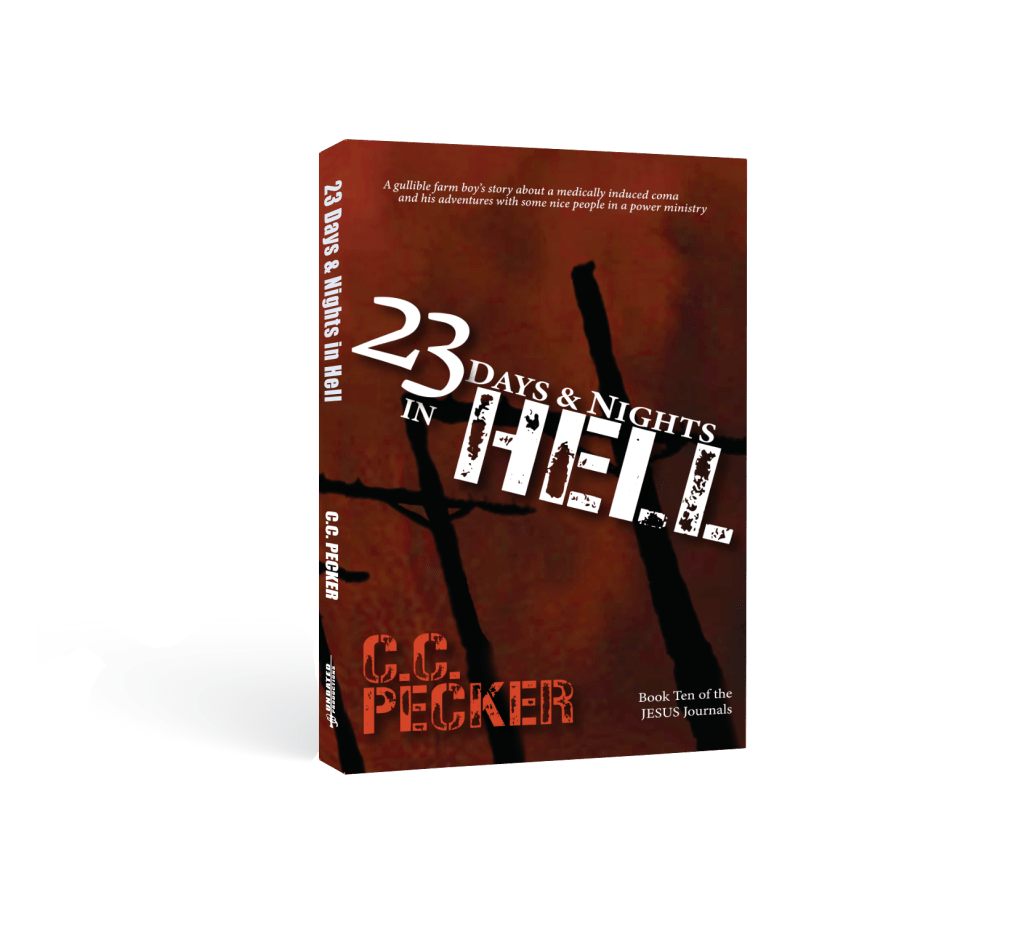
Some themes in my books below might not be appropriate for children.






© Copyright UNBATED Productions 2026
 The JESUS Journals