
BREAKFAST BIBLE STUDY
Christian Nationalists Should Learn about Jesus
Luke 6:21; Matthew 5:6 (NIV)
1/25/26
“Isn’t it troubling how Christian love has dovetailed so effortlessly with MAGA hate?”
– Grace Pecker
Because Trump spent last year messing up the supply chain with his tariffs and shutting down farm programs meant to help people with few means, I need to strategize which crops will sell best so that we don’t lose money on this year’s crops. If I cannot sell grain at a profit, then our farm will incur a loss. Most American business people know all about the supply chain because when the chain breaks (thanks to tariffs and budget cuts), everybody gets hurt except for the super-rich. In the end, it’s usually the poorest people who suffer from policies that benefit the rich.
“Cole, are you stressing again this morning?” Grace asked me when she came down for breakfast. “Were you up all night working on that computer?”
“I wanted to see if we could donate some of our crops to some of those countries that need grain,” I said, “but the cost to ship to poor countries would be too much on my own. We’d lose money just on shipping grain to the East Coast.”
“There must be local programs,” Grace said.
“I need to do bigger,” I said. “I’ve been reading those beatitudes. I don’t want people to go hungry.”
“You won’t even have crops in the ground for months,” Grace said.
“See, I can’t make bread and fish multiply like Jesus did,” I said, “or like that one time that Mr. Manning made sure we didn’t run out of food when all those people came to see him.”
“Mom and Mrs. Alexander stretched the tavern meat with extra tomato sauce to make that work,” Grace said.
“Mr. Manning never gave speeches like the ones Jesus gave in the Bible,” I said, “but nobody went hungry that day.”
“Mr. Manning did not perform a miracle on Mom’s tavern meat,” Grace said.
“But everybody saw him vanish,” I said. “Everybody saw that.”
“True,” Grace said.
“Why does Jesus say the beatitudes different in Luke and Matthew?” I asked.
“I think it might have to do with spiritual versus temporal focus, just like your brother said last week,” Grace said. “Both versions align with Jewish wisdom of the day.”
“What did I say about what?” Christian said when he found us at the breakfast table.
“The difference between the two sermons in Luke and Matthew,” I said.
“Oh,” Christian said. “Give me an example.”
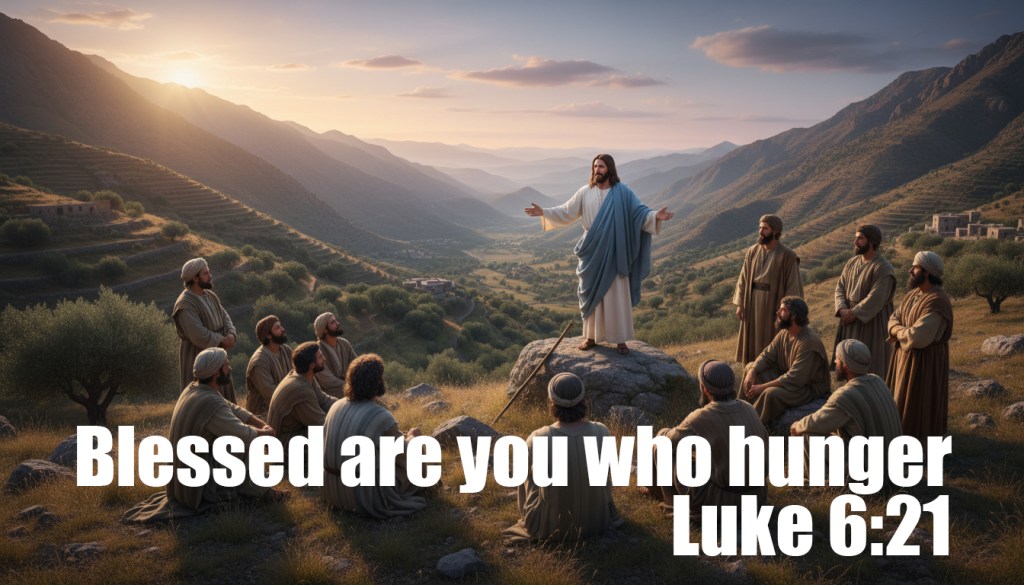
“It’s what Grace was going to pick this week,” I said. “Luke says, ‘Blessed are you who hunger now, for you will be satisfied.’ Matthew says, ‘Blessed are those who hunger and thirst for righteousness, for they will be filled.’”
“In Luke, he’s speaking to a crowd on a level place, right?” Christian asked.
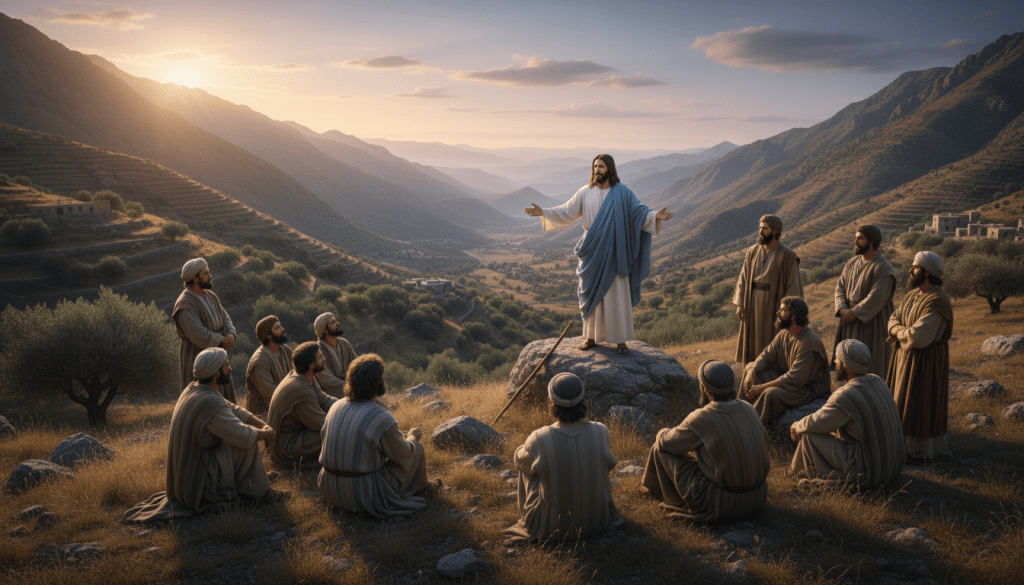
“Yep, in Matthew, he’s on a hill talking to his disciples,” I said.
“There you have it,” Christian said. “On the mount, he’s talking to his disciples about people who are hungry for righteousness. It’s a spiritual sermon, up on a mountain, where you go to be with God. In the level place, he’s talking to a crowd of poor people.”
“Did he do both?” I asked.
“He was preaching for at least a year,” Christian said.
“So did he?”
“Matthew and Luke probably condensed his sermons and created these settings for dramatic effect,” Christian said.
“He could have preached in those places, couldn’t he?” I said.
“I’m sure he did,” Christian said. “Matthew and Luke are giving you highlights.”
“Is that bad?”
“No,” Grace said. “He was a reformer. His message was based on Jewish tradition but was also quite radical for the time and place. These values conflicted with many of the values of those in power in the greater Roman world.”
“I think I know why Christian nationalists wouldn’t like these sermons,” I said.
“I could give you a number of reasons,” Christian said.
“But I want to hear what Cole has to say,” Grace said.
“They say they want righteousness,” I said, “but they see all the bad things Trump has done all his life. They ignore it. Also, when it comes to the hungry, they like to blame poor people. They even want money taken away to help poor children get school lunches. They also don’t want their taxes to help poor people. It’s ironic because they probably aren’t even seeing tax breaks. It’s all just going to billionaires. But the MAGA like to blame poor people.”
“Pretty spot on,” Grace said.
“It’s good what Jesus preached,” I said.
“It is,” Christian said, “but he was speaking, at least in Mark, about an apocalyptic earthly kingdom that did not come. He was making promises that he believed he could fulfill. Maybe the Jesus in Luke and Matthew was talking primarily about Heaven, but I think the historical Jesus believed in an earthly resurrection and an earthly kingdom brought about by supernatural means.”
“He did fulfill promises. He fed poor people with endless fish and chips,” I said.
“If you believe the miracle,” Christian said, “he did indeed. His disciples also believed in giving money to the poor. He preached much about wealth. Some of that wealth was spiritual. Some of that wealth was earthly.”
“People should try to help the poor,” I said.
“We agree,” Grace said.
“Will the Christian nationalists try to stop me if I want to help the poor?” I said.
“I won’t let them,” Christian said.
“But you don’t have to feed the hungry all on your own,” Grace said. “So…instead of trying to figure out where to ship your grain this year, let’s figure out this year’s crop and how best to sell your harvest. And then, if all goes well, we can donate to charities that will have the most impact in fighting hunger. Those charities will be able to do more with your contributions than we can figure out on our own.”
“Just give money?” I asked.
“Jesus knew that the coin of the realm had value as a means of helping the poor,” Christian said. “Jesus might have criticized wealth, but according to the gospels, he did have money. Judas held the coin purse for Jesus. They were getting the coin of the realm somewhere, likely from contributions to their ministry.”
“We have to do it with coins, too?” I asked.
“No, Cole,” Christian said. “Two thousand years ago, coins served as the best means of currency for trade. I was speaking metaphorically about coins. They didn’t have digital transactions. I don’t think they even had paper currency. Maybe. I don’t know.”
“Oh, good,” I said, “because I don’t think that banks would like to handle thousands of dollars in pocket change.”
In state legislatures across the country, Christian fundamentalists are passing laws meant to force the teaching of the Christian Bible in public schools. From the posting of textually inaccurate iterations of the Ten Commandments on the walls of classrooms to the incorporation of the “Trump Bible” across multiple pedagogical disciplines, these laws and mandates are sweeping the reddest parts of this nation.
The height of hypocrisy is banning books in the name of “protecting children” while mandating one particular book rife with numerous acts of sexual violence and scenes of graphic violence and genocide.
Book bans are dangerous. The Bible is worth reading and exists online and in public school libraries across the country, but proponents of mandating its formal teaching in public schools need to know what it actually says.
Some themes in my books below might not be appropriate for children.









© Copyright UNBATED Productions 2026
 The JESUS Journals