
BREAKFAST BIBLE STUDY
Hope for the Marginalized
Luke 6:21 (NIV)
2/8/26
“Blessed are you who weep now, for you shall laugh.”
– Jesus
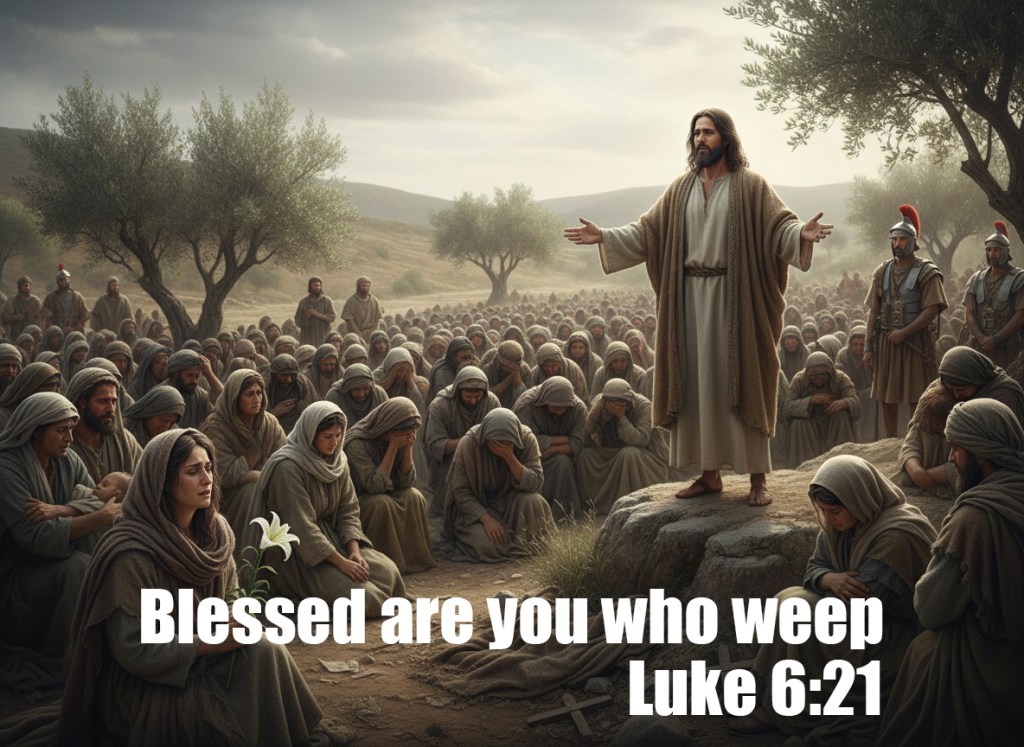
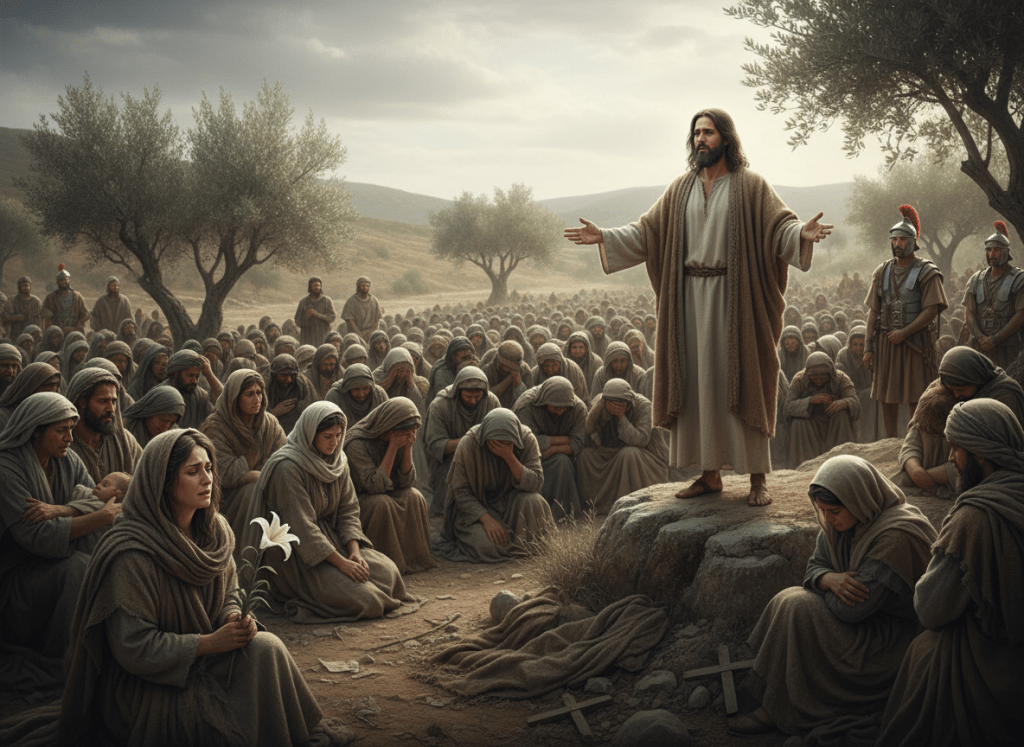
This week, Grace wants to keep the breakfast Bible study short because she has social justice work to do, so she picks a simple beatitude, which does not even fill a whole verse. According to Christian, Jesus probably kept his message simple for the large crowds in Luke and made it more complicated in Matthew for his closer followers. The one in Luke is on a flat place instead of the mountain.
“‘Blessed are you who weep now, for you shall laugh,’” I read. “I don’t get why Christian nationalists wouldn’t want this read.”
“It’s all about context,” Grace said. “These were marginalized people. Jesus was giving them hope.”
“But everybody gets sad sometimes,” I said.
“Probably true,” Grace said. “He’s turning the power structure on its head. He imagines a kingdom where the powerless will have power.”
“Luke is interesting because he follows his blessing with woes,” Christian said.
“What does that mean?”
“In his kingdom, the hungry will be filled, and those who are full will go hungry,” Grace said.
“Can’t everybody eat in his kingdom?” I asked.
“Not according to Luke,” Grace said. “In Luke, Jesus was not speaking to the powerful.”
“I’m glad I’m not powerful,” I said.
“You have wealth,” Christian said.
“Does that mean I won’t when his kingdom comes?” I said.
“That seems to be the message in Luke,” Grace said. “He’s giving poor people and downtrodden people hope that their fortunes will turn…but in the physical sense, his kingdom never came.”
“Unless you consider the church body his kingdom,” Christian said.
“But there are still hungry people and sad people,” I said.
“So…nothing’s really changed?” Christian asked me.
“Maybe in Heaven,” I said.
“Maybe,” Grace said.
“So…Christian nationalists wouldn’t like this?”
“If they feel marginalized, they may, but they hold all the power right now.”
“They do?”
“And are probably not feeling it because their king keeps failing them,” Grace said.
“You mean Orange Jesus,” I said.
“That I do,” Grace said.
“He’s all the woes and none of the blessings,” I said.
“That he is indeed,” Grace said.
“Don’t they see that?”
“They want the Ten Commandments in schools,” Christian said. “Do they ever consider adding the beatitudes?”
“I’ve never heard of them wanting the beatitudes in school,” I said.
“You’re telling me that Christian nationalists might not be interested in Jesus’ central teaching?” Christian asked.
“I guess not,” I said.
“Because the beatitudes are inconvenient for those who seek power,” Grace said.
In state legislatures across the country, Christian fundamentalists are passing laws meant to force the teaching of the Christian Bible in public schools. From the posting of textually inaccurate iterations of the Ten Commandments on the walls of classrooms to the incorporation of the “Trump Bible” across multiple pedagogical disciplines, these laws and mandates are sweeping the reddest parts of this nation.
The height of hypocrisy is banning books in the name of “protecting children” while mandating one particular book rife with numerous acts of sexual violence and scenes of graphic violence and genocide.
Book bans are dangerous. The Bible is worth reading and exists online and in public school libraries across the country, but proponents of mandating its formal teaching in public schools need to know what it actually says.
Some themes in my books below might not be appropriate for children.









© Copyright UNBATED Productions 2026
 The JESUS Journals