
BREAKFAST BIBLE STUDY
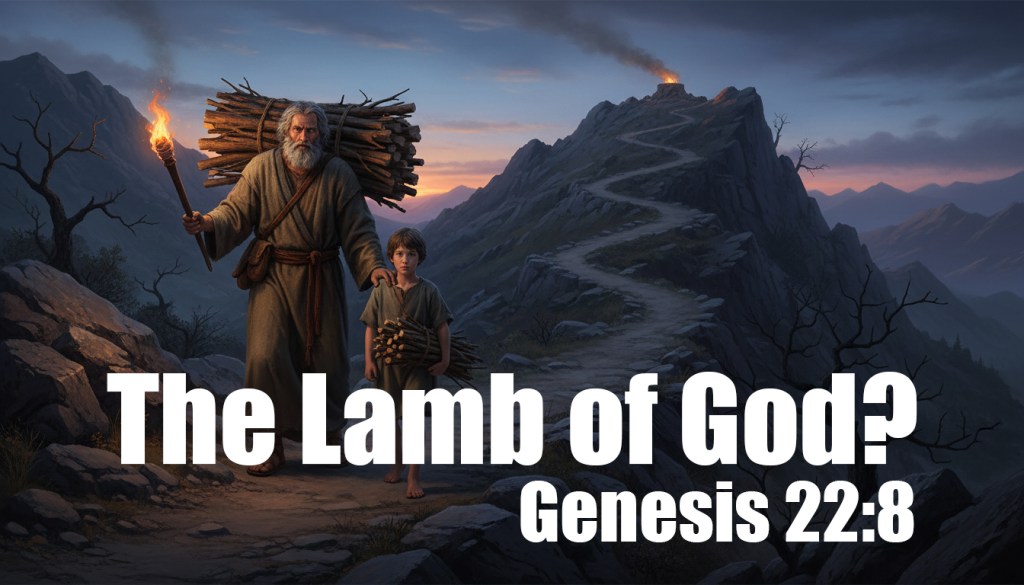
The Lamb of God?
Genesis 22:8 (NIV)
3/1/26
“Abraham answered, ‘God himself will provide the lamb for the burnt offering, my son.’ And the two of them went on together.”
– Genesis 22:8
Now that March has arrived, I have a long list to prepare for planting in May. Christian helps, but sometimes we don’t like to do things the same way in the barn. I tried to tell him that he could pace himself, but now he spends the weekend in bed because he hurt his back again. That means that we need to do breakfast Bible study in his room.
With Christian on bed rest, Grace tries not to talk about Trump’s new war with Iran, because she does not want to argue with Christian and make his back worse, but he will not turn off his television until I unplug it from the wall.
“I was watching that,” he said. “We need to know what’s going on in the world.”
“We never watch TV during breakfast Bible study,” I reminded him.
“I really just want to let the muscle relaxants do their job,” Christian said.
“Watching buildings blow up won’t help your back,” I said.
“Can we skip Bible study this week?” he said.
“It’s an easy prophecy,” I said. “It’s when Abraham tells Isaac that God will provide a lamb for an offering.”
“How is that a prophecy?” Christian said.
“God provided Jesus,” I said. “John the Baptist even calls Jesus that. He said, ‘Behold the Lamb of God, who takes away the sins of the world.’ That’s in the book of John, who is not the same as John the Baptist.”
“It’s an interesting connection,” Grace said as she came in with Christian’s tray, “but how is it a prophecy?”
“Jesus is the lamb,” I said. “Jesus is the sacrifice for the whole world.”
“Okay,” Grace said. “But wasn’t Abraham speaking about the lamb God would provide when he hauled Isaac up the mountain to murder him?”
“And wasn’t Abraham lying to Isaac?” Christian said.
“God provided a ram,” I said. “That’s pretty much the same as a lamb.”
“Okay, but did Abraham know that beforehand?” Christian said.
“Um. It’s a test of faith or something?”
“He needed to get Isaac up the mountain,” Grace said, “but he intended to sacrifice Isaac as El had instructed. He didn’t know that Yahweh would intervene. I’m sure we discussed this last year.”
“Oh,” I said, “but it’s still a prophecy, right?”
“Maybe,” Grace said. “And you can believe that if you want.”
“I do.”
“You can even say that John the Baptist was prophesying Jesus’ death,” Grace said.
“That’s right,” I said. “He was.”
“When was John’s Gospel written?” Christian said.
“It was the last one, right?”
“Most scholars think so,” Christian said. “Its theology is the most refined.”
“Calling Jesus the Lamb of God was pretty important?” Grace said.
“It’s like a double prophecy,” I said. “Lamb is used a lot to describe Jesus in the Epistles.”
“Which were also written after the fact,” Christian said.
“Maybe from notes,” I said.
“It’s an important metaphor,” Christian said. “I agree, but I think the metaphor evolved decades after Jesus died.”
“How come?” I asked.
“Matthew, Mark, and Luke don’t use the metaphor,” Grace said. “You can check.”
I re-read all four Gospel accounts of Jesus’ baptism. I read everything twice to make sure I had the stories straight as Christian finished his breakfast.
“Well?” Christian said.
“Why don’t Mark, Matthew, and Luke do it like John?” I asked. “John did it best, except for the part about God’s voice coming from Heaven. That’s a good part. I guess in John, John the Baptist saw a dove, but that’s different than hearing a voice from Heaven.”
“It’s visual,” Grace said, “not auditory, but it gets the message across.”
“So…how are the baptism accounts different?” I asked.
“We’ve talked about this,” Christian said.
“I forgot.”
“In Mark, John baptizes Jesus,” Christian said, “and then Jesus hears God’s voice.”
“Yep.”
“In Matthew, John reluctantly baptizes Jesus,” Christian said, “and then God speaks, and arguably, all could hear his voice.”
“Yep.”
“Luke follows Mark a little more closely,” Christian said.
“Yep.”
“In John, Jesus isn’t baptized at all,” Christian said. “John sees the dove and makes his proclamation as Jesus passes through the neighborhood. That’s how he recognizes Jesus.”
“Wait, weren’t Jesus and John the Baptist cousins?” I asked.
“Only according to Luke,” Grace said. “In the other gospels, that connection does not appear to exist. Cousins might not know each other, but I can only presume that the cousin relationship was a late addition to the nativity narrative, unknown to three out of four of the gospel writers. That said, Abraham was about to do a vile thing to his son, murdering him as a sacrifice. It’s a horrible story, even if Yahweh does intervene.”
“But I’m just talking about the prophecy of the lamb stuff,” I said.
“Fair enough,” Christian said, “but it’s strange that the four gospels portray John the Baptism in four different ways.”
“Which one is right?” I asked.
“That’s the problem with studying the Bible carefully,” Christian said. “Stories that seem to harmonize don’t when you pick them apart.”
“As for the prophecy,” Grace said, “the gospels were written long after the fact. You can believe Jesus is the Lamb of God prophesied in Genesis, but I believe this was a metaphor used by clever writers to make sense of Jesus’ death.”
“Jesus rose from the dead, too.”
“So you say,” Grace said.
In state legislatures across the country, Christian fundamentalists are passing laws meant to force the teaching of the Christian Bible in public schools. From the posting of textually inaccurate iterations of the Ten Commandments on the walls of classrooms to the incorporation of the “Trump Bible” across multiple pedagogical disciplines, these laws and mandates are sweeping the reddest parts of this nation.
The height of hypocrisy is banning books in the name of “protecting children” while mandating one particular book rife with numerous acts of sexual violence and scenes of graphic violence and genocide.
Book bans are dangerous. The Bible is worth reading and exists online and in public school libraries across the country, but proponents of mandating its formal teaching in public schools need to know what it actually says.
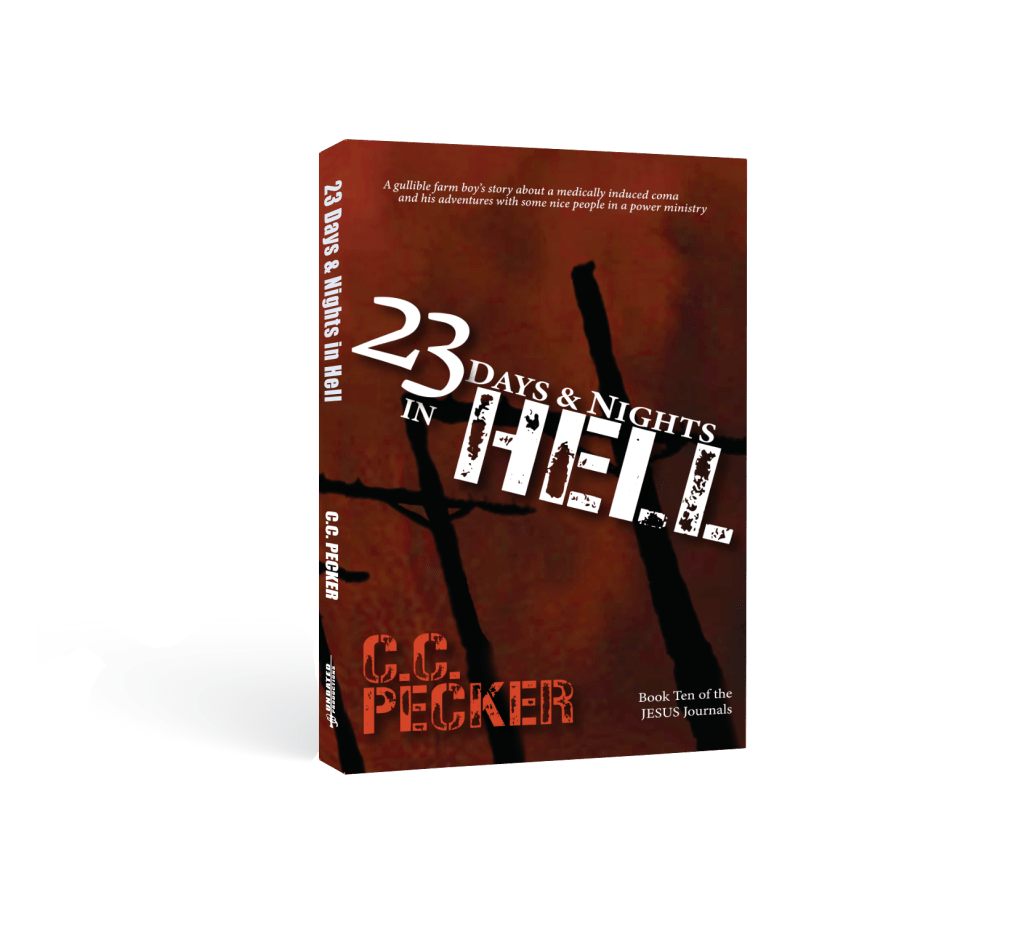
Some biblical themes in my books below might not be appropriate for children.






© Copyright UNBATED Productions 2026
 The JESUS Journals