
BREAKFAST BIBLE STUDY
Pierced May Not Mean Pierced
Psalm 22 (NRSVUE)
5/24/26
My God, my God, why have you forsaken me?
Jesus
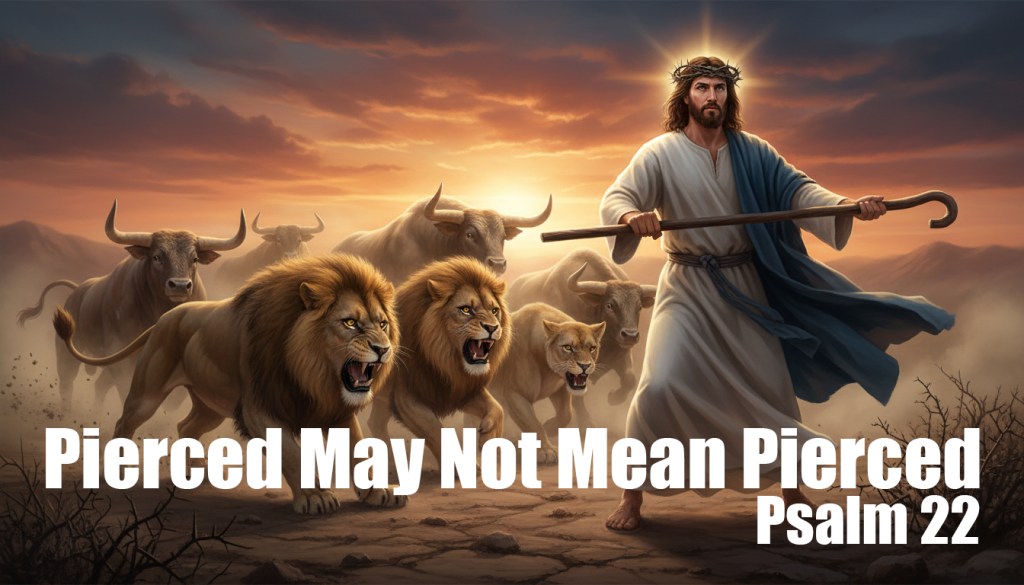
For this week’s breakfast Bible study, I have been saving a prophecy that is exactly like Jesus’ crucifixion so that Christian and Grace won’t be able to argue with me about any of it. I even warned them both a week in advance what I was going to pick. This way, they can figure out all their arguments in advance, fair and square. See, King David wrote the psalm a thousand years before Jesus was born, and he was like Jesus’ great-great-great-grandfather, going way back. This one is 100% prophecy. I studied everything about it.
“Psalm 22?” Christian asked when he opened my Bible. “You brought down the NIV. Is it okay if we use the New Revised Standard?”
“Is that the one that explains all the translations and stuff?” I asked.
“I consider it to be the most accurate that we have,” Christian said.
“Does it have ‘my God, my God’ at the start, which is what Jesus said?” I asked.
“It does,” Christian smiled.
“Because Jesus said those words when he died in Mark and Matthew,” I said. “I know you’re going to say that Matthew copied Mark, but I believe Jesus said it.”
“It’s a troubling way for Jesus to die,” Grace said. “It’s not the triumph over sin, death, and the power of Satan that many Christians would expect.”
“Jesus no doubt knew the psalm,” Christian said. “It was likely sung. If it was deeply ingrained in the people’s consciousness, it’s plausible he would say it. It’s fitting that Mark and Matthew would put the words in his mouth, even if he didn’t say it.”
“You’re already ruining it,” I said.
“How so?” Christian asked.
“You say it’s a song,” I said.
“Read what comes at the beginning of Psalm 22,” Grace said.
“‘To the leader: according to The Deer of the Dawn. A Psalm of David,’” I read. “Oh, it is a song, isn’t it?”
“Just like a lot of our Christmas songs,” Christian said, “this one was likely set to a popular tune of that day. Psalms are songs. That’s why they sound like poetry.”
“Now, you’re going to say that songs aren’t prophecies,” I said.
“No,” Christian said. “Many prophecies in the region came in the form of poetry and song.”
“Oh,” I said. “So…you’re not ruining it?”
“Jesus likely knew the psalm,” Christian said. “If I quote a song, that doesn’t necessarily mean I’m fulfilling prophecy.”
“But that’s not the only verse that’s prophetic,” I said.
“You’re right, Cole. Go on,” Grace said.
“See, the next part is about God being away from Jesus’ groaning and not answering,” I said. “That’s just what we were taught.”
“What happens next in the psalm?” Christian asked.
“‘O my God, I cry by day, but you do not answer; and by night but find no rest. Yet you are holy, enthroned on the praises of Israel. In you our ancestors trusted; they trusted, and you delivered them,’” I read.
“The first part sounds like Jesus or anybody who is suffering,” Grace said.
“Jesus had one night without rest during his trial,” Christian said, “and a day of suffering, which is not quite what Psalm 22 implies, but fair enough. That could be prophetic.”
“It gets better,” I said. “‘To you they cried and were saved; in you they trusted and were not put to shame. But I am a worm and not human, scorned by others and despised by the people. All who see me mock me; they sneer at me; they shake their heads; “Commit your cause to the Lord; let him deliver—let him rescue the one in whom he delights!”
“I’m not sure that’s better,” Grace said.
“But it’s what happened to Jesus,” I said.
“Public executions were always about humiliation for the punished,” Christian said.
“See, I just mean that everything in the psalm really happened,” I said. “That’s the important part. Then it talks about Jesus being born and stuff and believing in God his whole life, which is kind of weird because Jesus was God.”
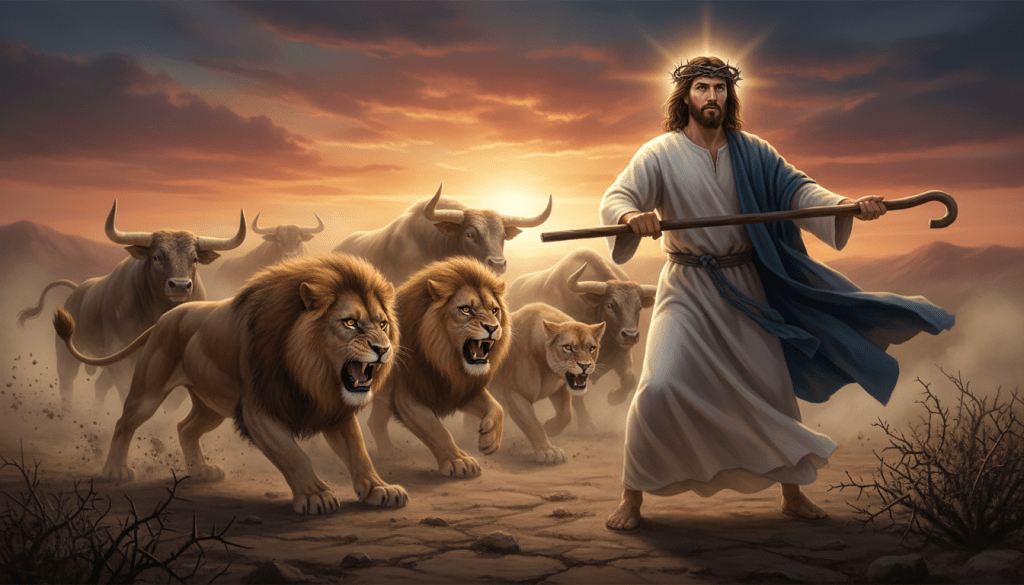
“Did bulls encircle Jesus?” Christian asked. “That’s what the psalm says next, yes?”
“That’s all a metaphor,” I said. “The lions and bulls are like Rome. And then Jesus suffers just like in the psalm. ‘I am poured out like water, and all my bones are out of joint; my heart is like wax; it is melted within my breast; my mouth is dried up like a potsherd, and my tongue sticks to my jaws; you lay me in the dust of death.”
“That is somebody who is definitely suffering,” Grace said.
“Just like Jesus suffered,” I said.
“Then what happens in the psalm?” Christian asked.
I read, “‘For dogs are all around me; a company of evildoers encircles me;
they bound my hands and feet.’”
“You sure about that?” Christian asked.
“Wait,” I said. “Shouldn’t it say that his feet are pierced?”
“That’s how most Bibles render it,” Christian said, “but that’s not the most accurate translation. The verse is disputed, but most scholars would never render this verse as being pierced with nails.”
“I think it should be pierced,” I said. “I’m pretty sure I’m right. I don’t read scholars, though. Wait…why is it disputed about being bound or pierced?”
“The Masoretic renders the verse as ‘like a lion my hands and my feet,’” Christian said. “That doesn’t make a whole lot of sense to modern readers. The Dead Sea Scrolls and the Septuagint render ‘ka’aru’ as pierced or dug. Even thousands of years ago, the meaning wasn’t clear. Language changes over time. What the original songwriter intended is unknown.”
“Then Jesus can count all his bones in the next part of the psalm,” I said.
“Was he starving?” Grace asked. “That’s a figure of speech indicating starvation.”
“I don’t know if he was starving,” I said. “He did have the Last Supper, but I’m not sure how much he ate that night.”
“Go on,” Christian said.
“They stare and gloat over him, just like in the gospels,” I said, “and exactly like in all four gospels, they divide up his clothes and cast lots.”
“The spoils of war,” Christian said. “The practice has fallen out of favor in modern times, at least in the West, but this was an age-old practice. It can be prophetic if you want, but this happened to many people who were executed.”
“What comes next?” Grace asked.
“Um,” I said. “I think that’s all the prophetic parts. It goes on to have God coming to the rescue and stuff.”
“So, that part’s not prophetic?” Christian said, “Only the first half is?”
“Um,” I said. “Does it all have to be in context?”
“Christian is about to tell you that this psalm follows a familiar pattern—lamentation followed by praise.”
“That’s the resurrection part,” I said.
“Does it talk about resurrection?” Christian said.
“Not exactly,” I said, “but it talks about how God’s name will be spread through the world.”
“And is Jesus mentioned in any of that?” Christian said.
“Jesus is God,” I said.
“Fair enough,” Christian said. “It’s a beautiful psalm.”
“All the gospel writers probably knew it,” Grace said.
“It depicts suffering poetically,” Christian said. “There’s truth in poetry. As prophecy, I’m just not sure it’s as specific as I would like it to be, but if I were making the case for prophecy about the suffering of Jesus, I would look to this psalm.”
“So, you believe me?” I asked. “Because I just don’t want you to go to Hell.”
“If we do go to Hell,” Grace said, “we were sent there by a loving God.”
“But that’s a longer discussion about infinite punishment for finite crimes,” Christian said. “And the nature of freewill and the importance of belief above all things.”
“I knew you were going to make this harder than it had to be,” I said.
In state legislatures across the country, Christian fundamentalists are passing laws meant to force the teaching of the Christian Bible in public schools. From the posting of textually inaccurate iterations of the Ten Commandments on the walls of classrooms to the incorporation of the “Trump Bible” across multiple pedagogical disciplines, these laws and mandates are sweeping the reddest parts of this nation.
The height of hypocrisy is banning books in the name of “protecting children” while mandating one particular book rife with numerous acts of sexual violence and scenes of graphic violence and genocide.
Book bans are dangerous. The Bible is worth reading and exists online and in public school libraries across the country, but proponents of mandating its formal teaching in public schools need to know what it actually says.
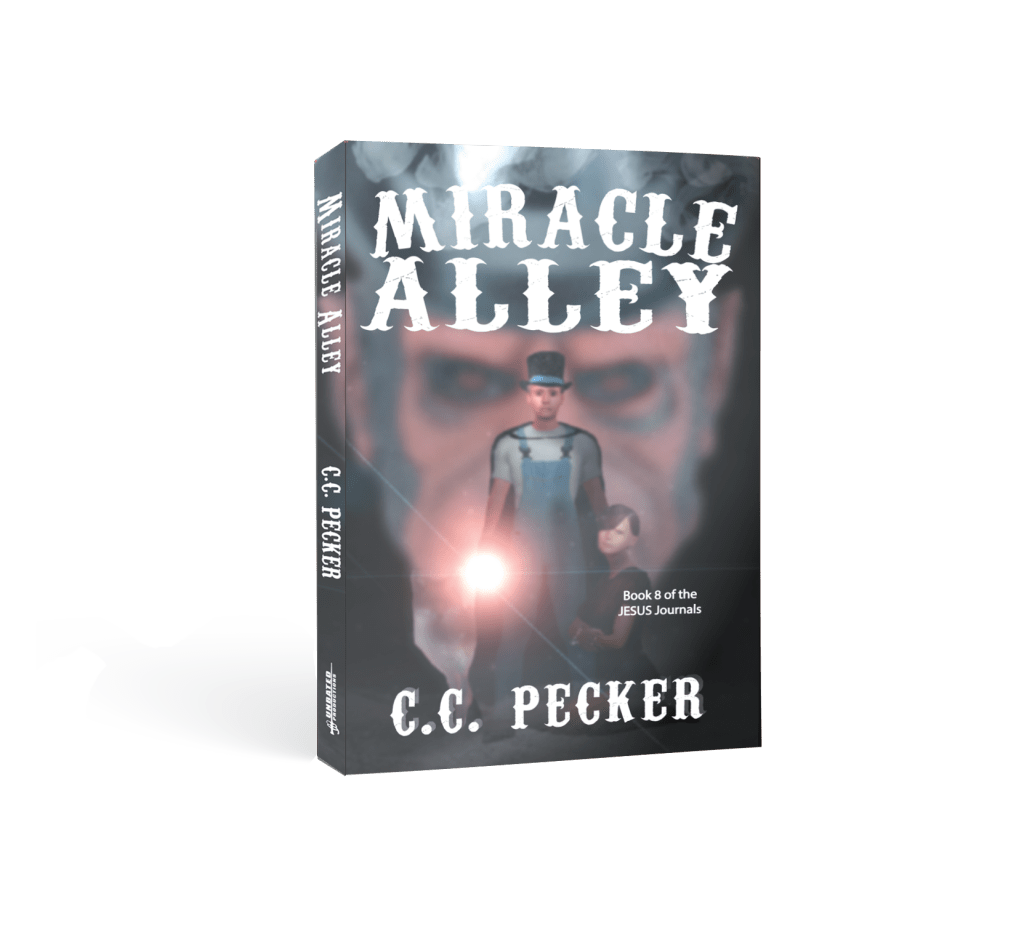
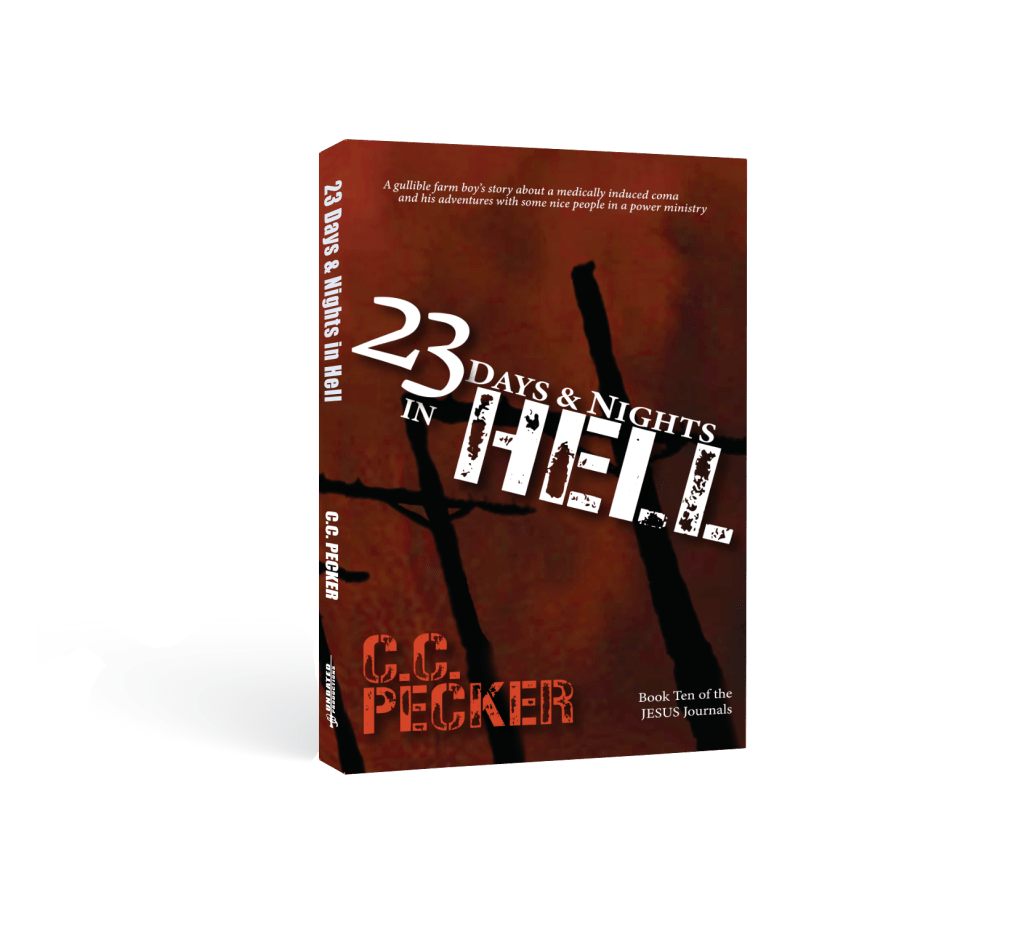
Some of the biblical themes in the books below might not be appropriate for children.





© Copyright UNBATED Productions 2026

