
BREAKFAST BIBLE STUDY
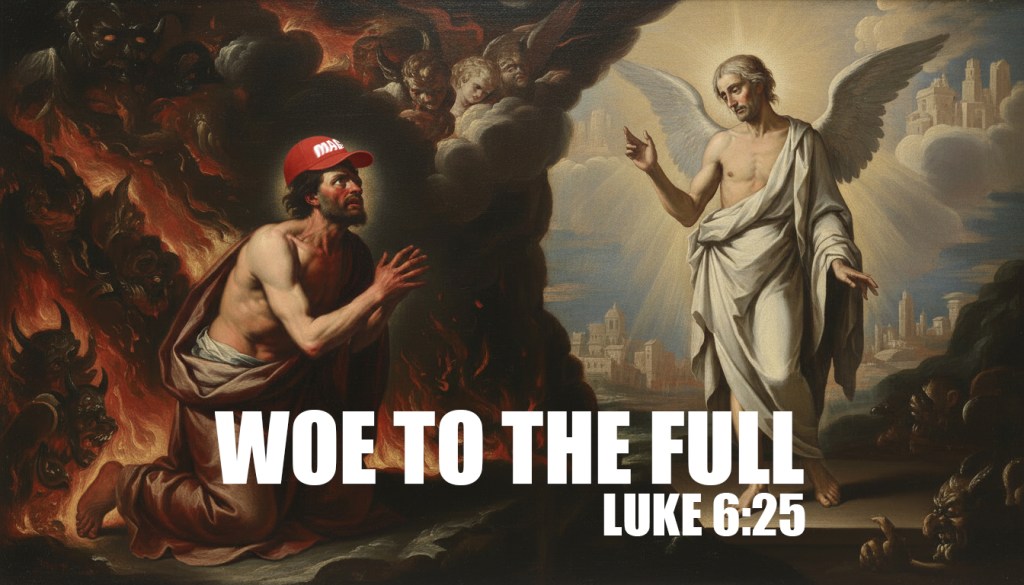
Woe to the Full
Luke 6:25 (NRSVUE)
6/14/26
Woe to you who are full now,
for you will be hungry.
Jesus
When I came down for breakfast this morning, Grace had already made eggs and pancakes the way I like, but Christian was nowhere to be found, even though he usually wakes up as early as I do. For some reason, Grace slept in last week, so I figured she must have been well-rested and ready to run the lesson on the second woe from the Bible.
“Breakfast is almost ready,” I said. “Should I go wake up Christian?”
“Let him sleep in,” Grace said.
“He doesn’t sleep in,” I said. “Is he sick?”
“No.”
“Is he tired?”
“A little.”
“How come?”
“Can I be straight?”
“Yep.”
“Growing up with the religiosity was tough for both of us,” Grace said. “These little Bible studies are bringing back some bad memories.”
“I’m sorry,” I said.
“We know you like them,” Grace said. “We think they’re important. We think they help you understand our thinking, but we decided to give each other a break for a few weeks.”
“You’re mad at me?”
“No,” Grace said. “I needed a break last week. Christian needs a break this week.”
“I’m sorry.”
“It’s not your fault,” Grace said. “You’re resilient. You endured the same things growing up. You had it far worse after Dad died. We just need a break.”
“So, no more breakfast Bible study?”
“I didn’t say that,” Grace said. “We’re just giving each other a break.”
“Oh,” I said. “Do I get a break, too?”
“That would defeat the purpose,” Grace said. “I want you to eat as we do this.”
“I always do,” I said. “That way, you guys can give speeches and stuff about bad people and the Bible having bad morality.”
“I don’t want you to think you need to stop eating to make Jesus happy,” Grace said.
“Because of the woe?” I said. “Because it’s about people who are full not getting any food? See, I know that’s not true because Jesus told me to feed the hungry.”
“It’s about class warfare,” Grace said. “Jesus was preaching to people who probably saw much food insecurity.”
“I thought it was about people being earthly, instead of heavenly,” I said.
“That’s how church leaders reinterpreted the text over the centuries, but Jesus was speaking to a whole bunch of poor people. As his followers gained power through the century, they reinterpreted Jesus’ message to fit their ends.”
“How do you know they were poor when Jesus was alive?” I asked.
“He wasn’t preaching on the Sabbath, most likely, because he obeyed Jewish law,” Grace said. “If he was preaching to a crowd, it was probably a crowd of people who didn’t have work.”
“Are you sure?”
“No,” Grace said. “But we know there was rampant poverty, and we know that Jesus spoke at length about money.”
“He was talking about heavenly rewards,” I said.
“And an earthly kingdom to come,” Grace said, “that he would rule.”
“And he’d let rich people go hungry?” I asked.
“As reversal of fortune, as just desserts,” Grace said. “It’s a message poor people could get behind. Rich people probably didn’t like that message so much. Church leaders probably reshaped the message during more stable times to make it about materialism and heavenly reward.”
“Which is it?”
“Both maybe?” Grace said. “Remember, there were four gospels with four varying theologies. Jesus was an itinerant preacher. He wasn’t rich. His message was what he could give.”
“He had the wise men’s gifts,” I said.
“Which we discussed might be part of a legend surrounding his birth and not historically accurate,” Grace said.
“But it could have happened,” I said.
“Remember the parable of the rich man and Lazarus?” Grace asked.
“They’re both dead,” I said. “Lazarus is in Heaven. The rich man is not. He’s suffering.”
“Because he was rich,” I said. “And he didn’t believe in Jesus.”
“Belief in Jesus had nothing to do with the parable,” Grace said. “Lazarus went to be with Abraham. The rich man went to Hades, depicted as a place of agony.”
“Why would Christian nationalists not like this woe?” I asked.
“I think many of them would see themselves as Lazarus,” Grace said. “They feel like victims. I’m not sure they like feeling like victims.”
“Are they?”
“Some,” Grace said. “But look at their leader. Trump’s a rich man who has taken away charity meant for the poorest people and given it to the richest people. He’s scammed people out of money most of his life. His presidency is one big scam.”
“So, the woe applies to him,” I said, “but Christian nationalists wouldn’t see it that way?”
“That’s a good assessment,” Grace said.
“Nobody thinks they’re the bad guy,” I said, “even when they are.”
“Considering the beatitudes and woes in Luke,” Grace said, “and the parable of the rich man and Lazarus, where do you think Trump would end up?”
“Asking Abraham to send Moses to quench his thirst with a drop of water?” I asked.
“And those who enable Trump?” Grace asked. “And those who have cheered on the destruction of agencies meant to help the poorest people while enabling the rich to become even richer. What would Jesus think should happen to them?”
“He might woe them,” I said, “but I’m hoping they would repent and be better people.”
In state legislatures across the country, Christian fundamentalists are passing laws meant to force the teaching of the Christian Bible in public schools. From the posting of textually inaccurate iterations of the Ten Commandments on the walls of classrooms to the incorporation of the “Trump Bible” across multiple pedagogical disciplines, these laws and mandates are sweeping the reddest parts of this nation.
The height of hypocrisy is banning books in the name of “protecting children” while mandating one particular book rife with numerous acts of sexual violence and scenes of graphic violence and genocide.
Book bans are dangerous. The Bible is worth reading and exists online and in public school libraries across the country, but proponents of mandating its formal teaching in public schools need to know what it actually says.
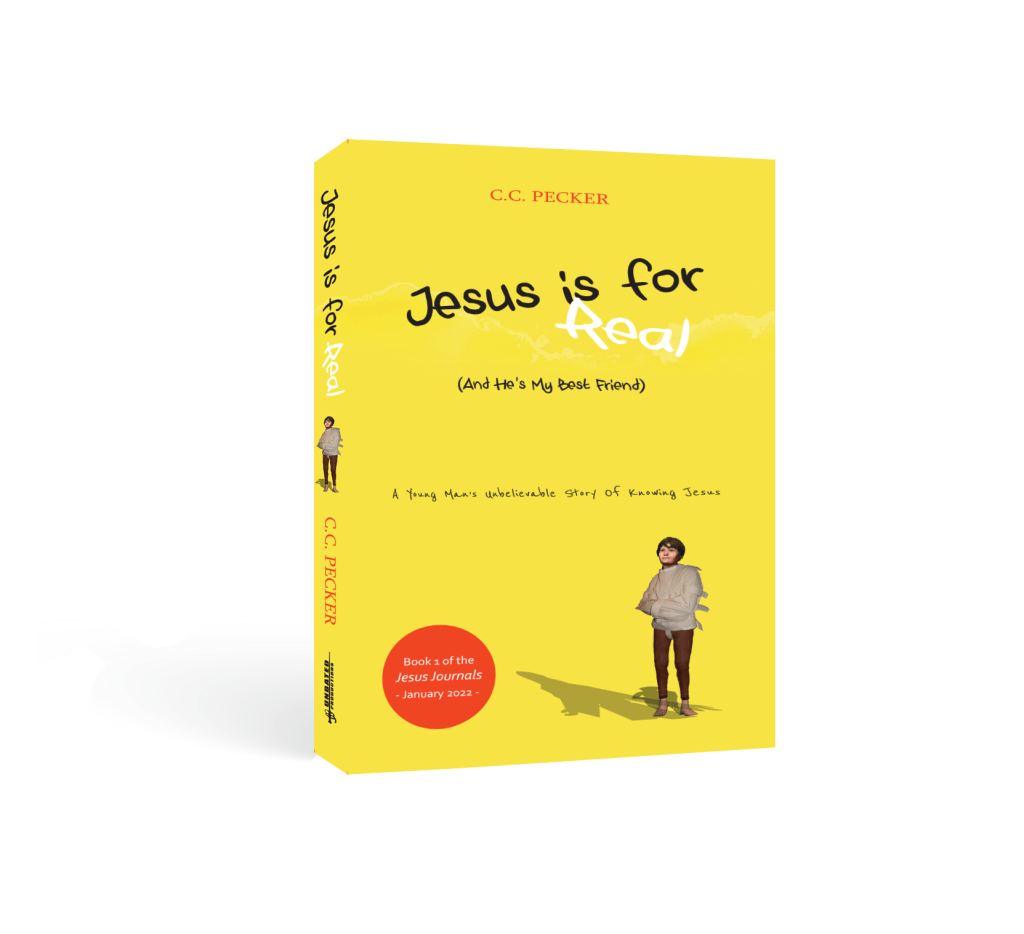
Some of the biblical themes in the books below might not be appropriate for children.








© Copyright UNBATED Productions 2026

