
Silent Before His Accusers?
Psalm 38:12-13 (NIV)
8/16/26
“Christian nationalism is about power, nothing more.”
Christian Pecker
Since my birthday is around the corner, Grace tried to switch breakfast Bible study to a question about what I want for my birthday. I kept telling her that I have everything I need, and if I don’t, I can just order it on Amazon.com or something, but she really thinks I need birthday presents. Finally, I told her I want Psalm 38, which is the topic of this week’s breakfast Bible study.
“It’s prophecy week again?” Christian asked.
“According to Psalm 38,” I said, “Jesus was going to remain silent before his accusers, which is what Jesus does.”
“Are you sure about that?” Christian asked.
“Yep!”
“What’s the story of Psalm 38?” Grace asked.
“It’s not a story,” I said. “It’s a prophecy. It has enemies and how Jesus was beaten and stuff, but he remains silent, just like in the New Testament.”
“Are you sure that’s what’s happening in Psalm 38?” Christian asked.
“In Psalm 38, the person is in really bad shape,” I said. “He can’t even speak anymore because he has so many wounds. It kind of happens in a different order, because Jesus has his trials and then he gets crucified, but I have a theory.”
“What’s your theory?” Grace asked.
“See, because the Book of Psalms is full of songs and poetry, they have to make things rhyme in the original language, so things get out of order because of the rhyming.”
“Ah,” Christian said. “Interesting theory. They psalms do use several different types of parallelism. Do you first want to tackle Psalm 38 itself or what happened to Jesus during his trials, according to the Gospels?”
“Psalm 38 came first,” I said. “That’s why it’s a prophecy.”
“Okay,” Christian said, flipping open his Bible. “A song of David. Starts out with the petitioner asking the Lord not to rebuke him, which must be about David, and not Jesus, because Jesus was without sin. Evidently, the Lord has slung arrows that pierced the petitioner. The arrows evidently caused sickness. I don’t recall Jesus being sick or sinning. And the sickness is due to the petitioner’s sin. Again, doesn’t sound like Jesus. Petitioner feels guilty…which Jesus would not have felt.”
“So, not Jesus in the first part of the psalm?” I asked.
“Festering wounds,” Christian said. “Again, sickness, sickness, sickness. ‘Friends avoid me.’ Maybe fear of contagion. People want to kill the petitioner. That could be Jesus or David, but I’m leaning toward David or another ancient figure. In ancient times, people attributed sickness to sin, so people shunned the sick. The act of shunning did have an evolutionary advantage. They knew nothing about germ theory, but by isolating disease, ancient tribes might have survived disease.”
“The Bible doesn’t have evolution,” I said. “Science hadn’t been invented yet.”
“Petitioner can’t hear and speak,” Christian said. “That doesn’t sound like Jesus.”
“He kept quiet,” I said.
“By choice,” Christian said. “In Psalm 38, the man is sick.”
“The prophecy said he would remain silent, just like Jesus did during his trials,” I said. “They said all sorts of bad things about him. Verses twelve and thirteen are almost like Jesus.”
“Except for the deafness part,” Grace said.
“Again, the petitioner admits his sin and pleads for help from the Lord, claims he has enemies without cause, and pleads to God. Overall, Psalm 38 doesn’t seem prophetic to me.”
“Grace might think it is,” I said.
“Not really,” Grace said.
“And Jesus wasn’t silent during his trial, Cole,” Grace said, “not according to the Gospel of John. Would you like to discuss that?”
“He wasn’t?” I asked.
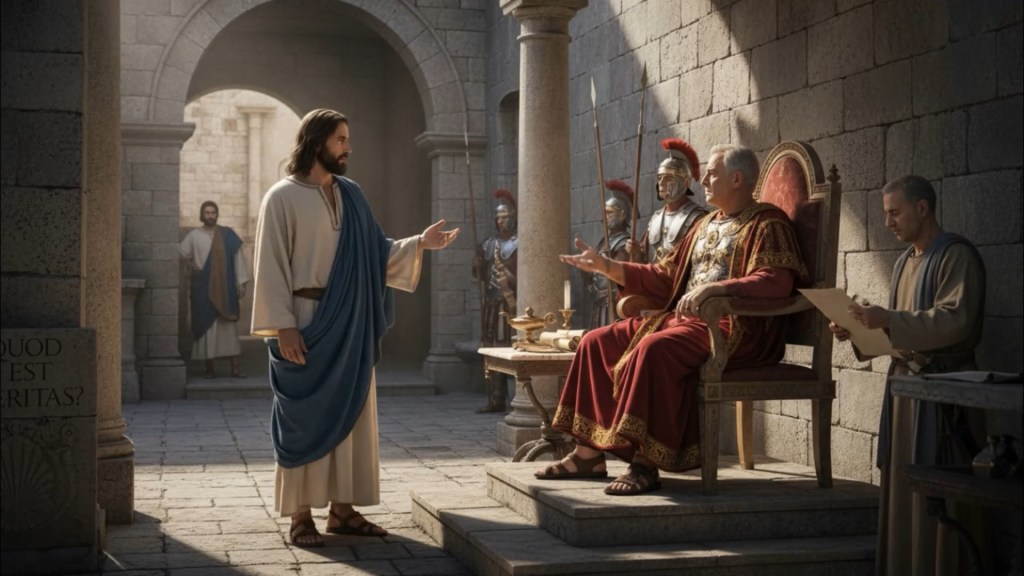
“In John, Jesus chatted with Pilate,” Grace said. “That’s when Pilate asks the question, ‘What is truth?’ Jesus didn’t give him an answer to that, but they had a lengthy conversation.”
“They did?” I asked. “Wait, Pilate wasn’t the only person to have a trial.”
“No, Jesus spoke to the high priest, too,” Grace said. “In John, Jesus wasn’t silent, but in Matthew and Mark, Jesus was somewhat silent. Matthew claims this was to fulfill prophecy. Luke is the only Gospel that sets Jesus before Herod. Jesus does not answer Herod’s questions…so Jesus was silent and wasn’t silent.”
“Wait, so the Gospels are different from each other about the trials?” I asked.
“The synoptic accounts contradict John,” Christian said. “You could claim Jesus did not defend himself in the synoptics, but in the Book of John, he speaks with Pilate and is quite explicit about his purpose. He was there to be crucified to save the world. Proving this was John’s theological intent. Remember, John was written years after Mark, so Christianity had gone through theological developments. The synoptic books had strong theological intents, but I don’t think they’re quite as ironed out as in John. Jesus is divine in the synoptics, but John specifically calls him the Son of God. Jesus was certainly not silent in John.”
“So…wait, the prophecy is right in the synoptics but not in John?” I asked.
“Sort of,” Christian said.
“How come?”
“Again, different theological purposes,” Christian said.
“What happened for real?” I asked.
“We don’t know,” Grace said.
“We can only guess,” Christian said, “but Jesus did cause a disturbance in the Temple earlier that week.”
“He was driving out the moneylenders,” I said.
“That sort of insurrection would have been enough for the Romans,” Grace said.
“Even if that event didn’t happen,” Christian said. “Jesus did claim he would become King of the Jews in the kingdom to come.”
“What’s wrong with that?” I asked.
“Rome was in power. If Jesus became king, Rome would have to go,” Grace asked.
“I think Jesus just meant that he’d be king in Heaven,” I said.
“I’m guessing the Romans weren’t on the same spiritual wavelength as Jesus,” Christian said. “Herod was the nominal king. Romans might have viewed Jesus as a usurper. The only way he could have become king was by overthrowing another king and disturbing Roman order. That would have been a problem for Pilate. It would have given Pilate a perfect reason to execute Jesus.”
“But didn’t Pilate say Jesus was innocent?” I asked.
“In John, he did,” Christian said. “It’s a good bit of theater, but we have no record outside the Gospels of the Romans letting any mob decide a man’s fate. Execution was simply a matter of a pen stroke. On top of that, the Romans certainly wouldn’t have let Barabbas go free.”
“Do you know what his name means?” Grace asked.
“Barabbas’ name doesn’t mean Barabbas?”
“Abba means father. Bar means son. So, son of father,” Christian said. “A strange name for a man, but a nice literary contrast for Jesus.”
In state legislatures across the country, Christian fundamentalists are passing laws meant to force the teaching of the Christian Bible in public schools. From the posting of textually inaccurate iterations of the Ten Commandments on the walls of classrooms to the incorporation of the “Trump Bible” across multiple pedagogical disciplines, these laws and mandates are sweeping the reddest parts of this nation.
The height of hypocrisy is banning books in the name of “protecting children” while mandating one particular book rife with numerous acts of sexual violence and scenes of graphic violence and genocide.
Book bans are dangerous. The Bible is worth reading and exists online and in public school libraries across the country, but proponents of mandating its formal teaching in public schools need to know what it actually says.
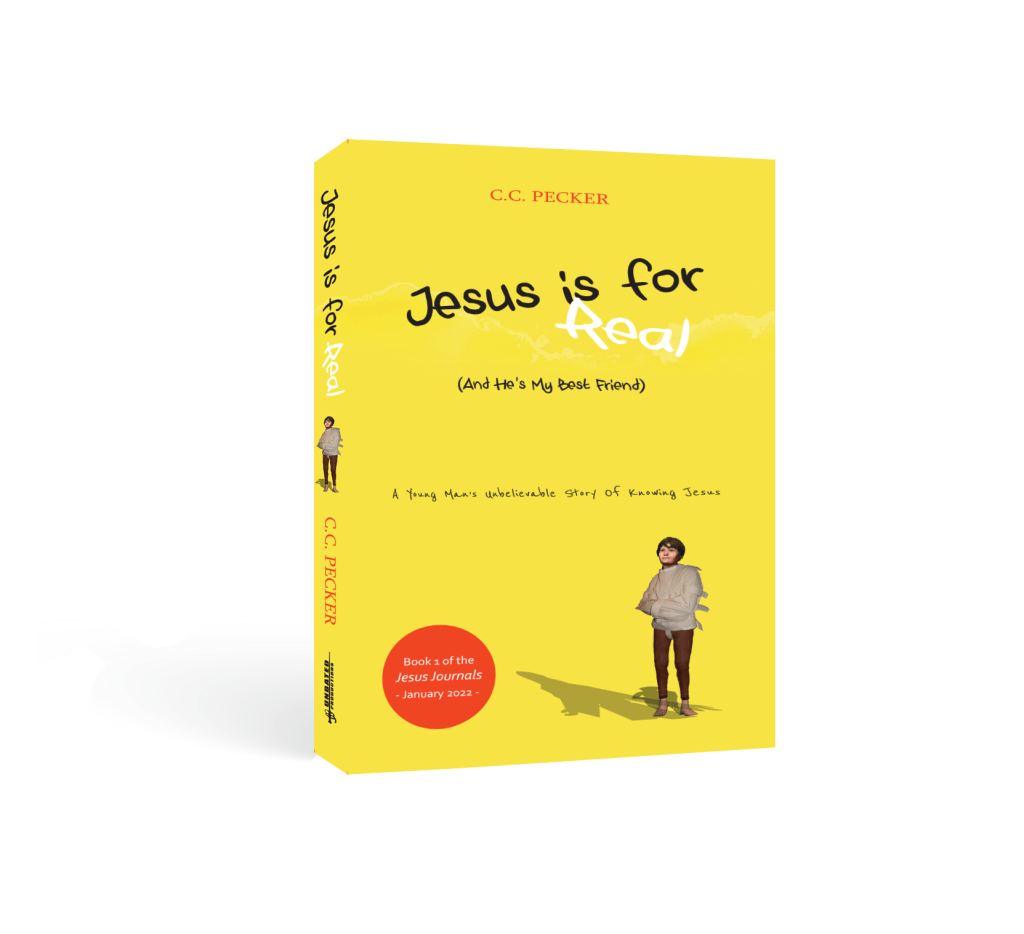
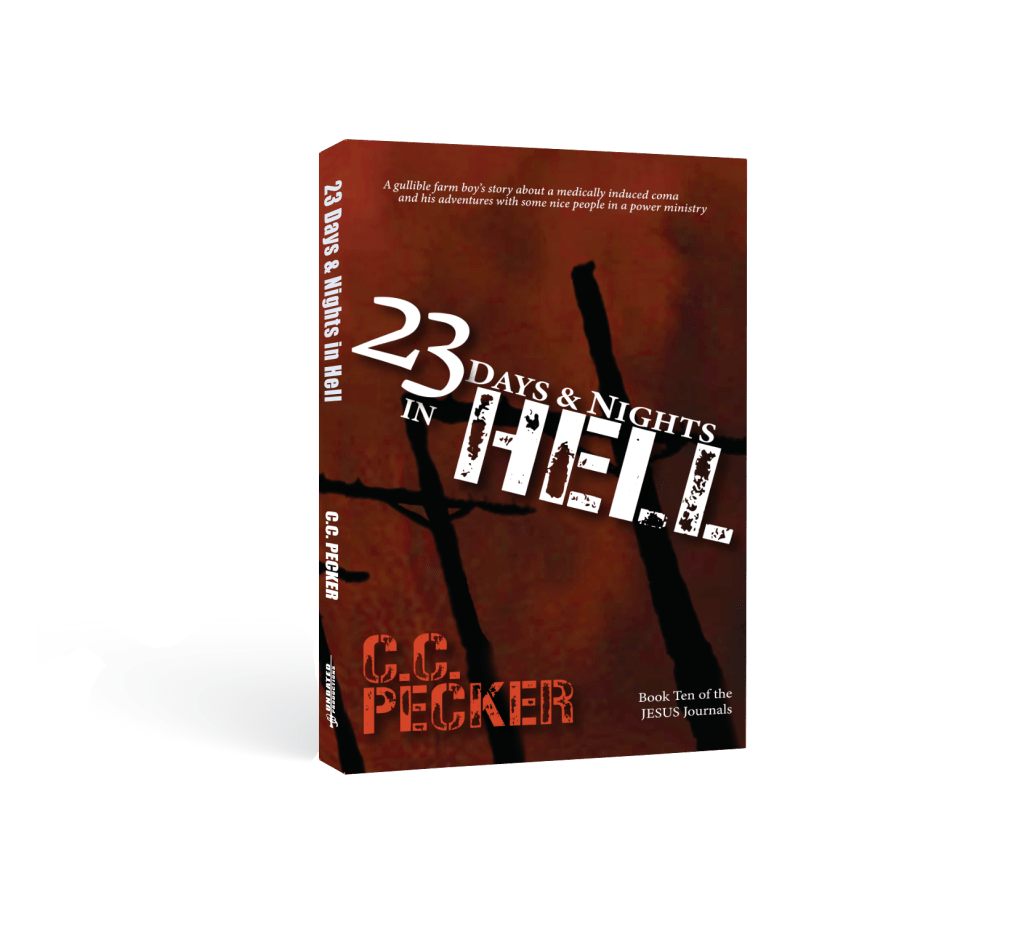
Some of the biblical themes in the books below might not be appropriate for children.







© Copyright UNBATED Productions 2026

