
Jesus Sends Hagar Back to Slavery
Genesis 16:7-11 (NIV)
9/6/26
“Isn’t it troubling how Christian love has dovetailed so effortlessly with MAGA hate?”
Grace Pecker
Labor Day week always makes me think about harvest. This one psychologist who turned MAGA or something used to talk about how the patriarch people in the Bible were always planning for harvest to please God.
Success in farming for me means I have money to buy seeds for next year after feeding a whole bunch of people, even though Trump is trying to ruin that with his bad trade policies.
Since that MAGA psychologist seemed so sure about his Bible studies, I went looking for advice about this year’s harvest in Genesis.
Instead of finding advice that would help me, I found another one of those Christophanies. This time, Jesus preincarnate comes to a woman named Hagar, who was fighting with Abram’s wife, Sarai, a name some people spell as Sarah.
Hagar runs away after getting pregnant by Abram, even though Abram already had a wife, who was also his half-sister. In the olden times, people married half-sisters because there was a shortage of people after the flood. Hagar met Jesus preincarnate twice, but I just like the first one in Genesis, which goes like this:
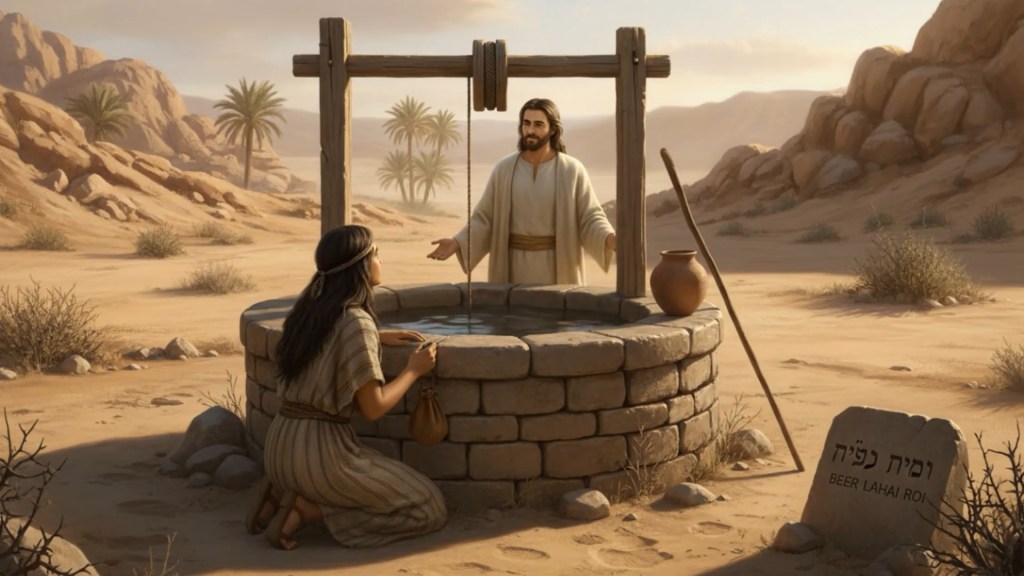
The angel of the Lord found Hagar near a spring in the desert; it was the spring that is beside the road to Shur. 8 And he said, “Hagar, slave of Sarai, where have you come from, and where are you going?”
“I’m running away from my mistress Sarai,” she answered.
9 Then the angel of the Lord told her, “Go back to your mistress and submit to her.” 10 The angel added, “I will increase your descendants so much that they will be too numerous to count.”
11 The angel of the Lord also said to her:
“You are now pregnant
and you will give birth to a son.
You shall name him Ishmael,
for the Lord has heard of your misery.
He will be a wild donkey of a man;
his hand will be against everyone
and everyone’s hand against him,
and he will live in hostility
toward all his brothers.”
13 She gave this name to the Lord who spoke to her: “You are the God who sees me,” for she said, “I have now seen the One who sees me.” 14 That is why the well was called Beer Lahai Roi; it is still there, between Kadesh and Bered.
15 So Hagar bore Abram a son, and Abram gave the name Ishmael to the son she had borne.
Since not all of the story makes sense to me, I decided to show Christian and Grace the story during breakfast Bible study to see if they think that the angel of the LORD was actually Jesus, as a bunch of Christian websites claim.
“No,” Christian said. “That may be a modern interpretation. In fact, this story might have been a foundational myth for tribes outside of Israel. Israelite scribes might have given it their own Judean twist. If you look at the story, you see clues that this was an unknown deity tied to this place called Beer Lahai Roi. For one, Hagar names the god she encounters. That’s unusual. This might have been the same universal god that Moses encountered in the burning bush, but I doubt it. In the Exodus story, Yahweh reveals Moses’ name to him. Note that in ancient times, people associated gods with places, tribes, and nations. Only much later, like in the reign of Josiah, did the gods become consolidated through human reform. In some translations of Genesis, Hagar sees the back of the god. In all translations, a place name is attributed to the god and the encounter. Nothing I see suggests this was originally a story about Jesus or an angel of the Lord. This was likely a local god who was part of a larger pantheon, worshiped by people within and beyond Israel.”
“Um…are you sure?” I asked.
“Hagar and Ishmael were characters known by tribes in the region,” Christian said. “Ishmael was the patriarch of the Arab people, according to tradition. This is why a Jewish scribe put unflattering words in the angel’s mouth regarding Ishmael.”
“Like what?” I asked.
“He’s compared to a donkey,” Grace said. “That’s not a flattering way to describe any people.”
“He was also good at archery,” I said. “That’s flattering.”
“Sure,” Grace said, “But I don’t think you want this story to involve Jesus.”
“How come?”
“Hagar was a slave,” Grace said, “raped by an old man.”
“Raped?”
“If a slave owner has sex with his slave, it’s always rape,” Christian said.
“Instead of helping Hagar,” Grace said, “the angel sends Hagar right back to her master and his cruel half-sister wife.”
“Oh,” I said. “Jesus would never do that.”
“Paul would,” Christian said. “We have the letter to Philemon to prove it.”
“I don’t think Jesus is in this story,” I said. “It probably used that word malak.”
“It probably does,” Christian said.
“Messenger,” I said. “Angel.”
“Yes,” Christian said.
“If I send a messenger,” I said, “that messenger isn’t me. This time, it can’t be Jesus forcing Hagar to get raped by Abraham.”
“If that’s the logic that got you there,” Grace said, “that’s good enough for me.”
In state legislatures across the country, Christian fundamentalists are passing laws meant to force the teaching of the Christian Bible in public schools. From the posting of textually inaccurate iterations of the Ten Commandments on the walls of classrooms to the incorporation of the “Trump Bible” across multiple pedagogical disciplines, these laws and mandates are sweeping the reddest parts of this nation.
The height of hypocrisy is banning books in the name of “protecting children” while mandating one particular book rife with numerous acts of sexual violence and scenes of graphic violence and genocide.
Book bans are dangerous. The Bible is worth reading and exists online and in public school libraries across the country, but proponents of mandating its formal teaching in public schools need to know what it actually says.
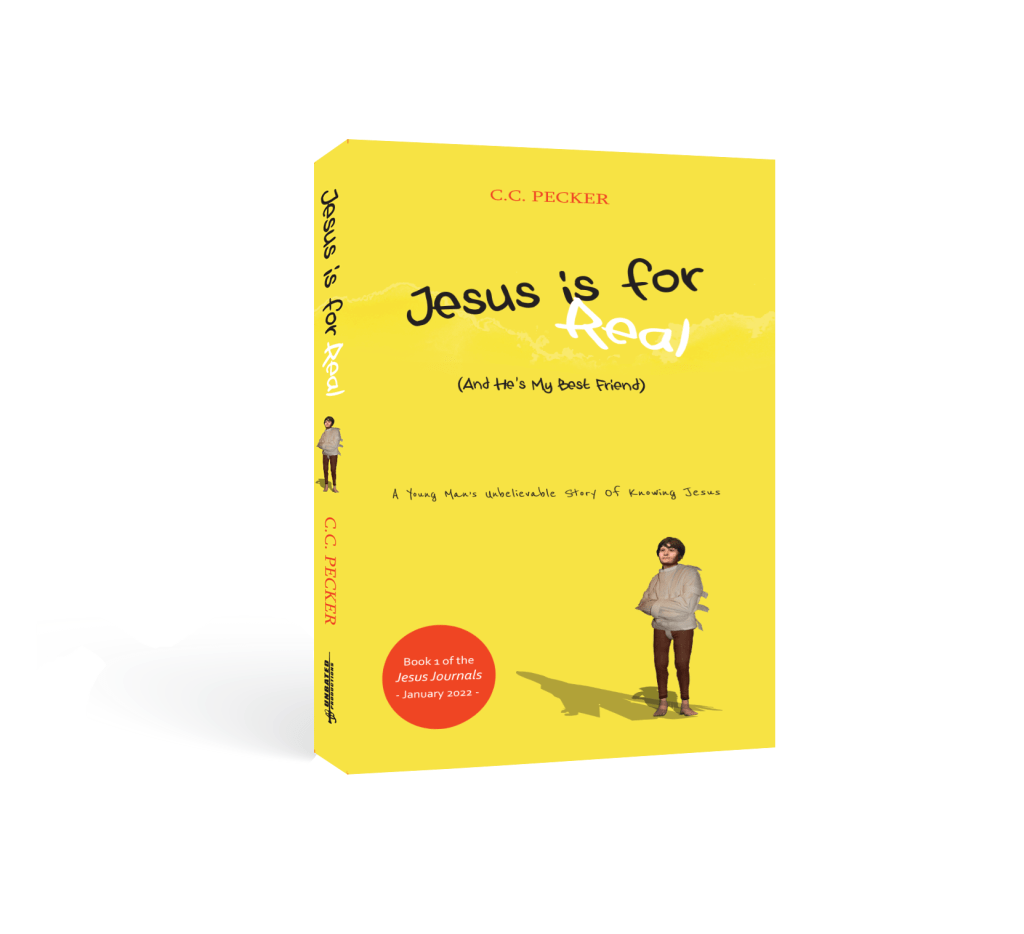
Some of the biblical themes in the books below might not be appropriate for children.








© Copyright UNBATED Productions 2026

