
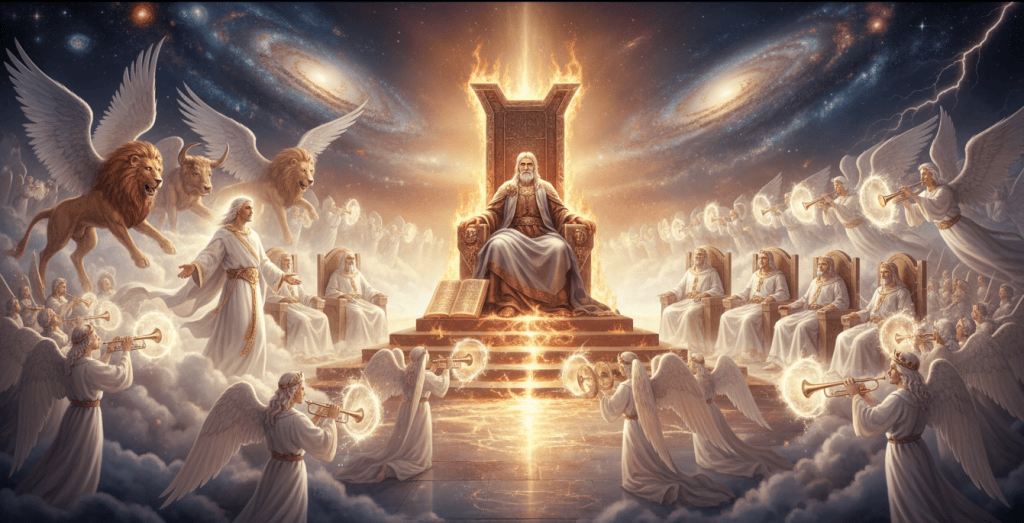
The Ancient of Days
Daniel 7:13-14 (NIV)
9/27/26
“Isn’t it troubling how Christian love has dovetailed so effortlessly with MAGA hate?”
Grace Pecker
This week, when we were prepping the combine for harvest and waiting out the rain, Christian told me that we were too busy this time of year to discuss the Book of Daniel, even though it has Christophanies and prophecies about Jesus.
Once we start harvesting, we work from before sunup and long after the sun goes down. He tells me that Daniel is far too complex to cover in our breakfast Bible studies and that he doesn’t have the mental energy to parse the text and answer my questions or something. He just wants to make sure that our equipment is working and harvest goes smoothly.
“But I understand the Book of Daniel,” I said.
“Sure you do. What’s a chiasm?” he said. “And hand me a bigger crescent wrench.”
“That’s where they sandwich the main idea with opposite ideas. It goes A-B-C-B-A,” I said.
“You…learned about chiasms where?” Christian said.
“A book on making films that Grace gave me for Christmas,” I said. “Robocop does chiasm. It’s just symmetry. It’s when a story has mirror ideas that unfold from the middle. Life doesn’t work that way usually. But literature and movies can. I haven’t seen Robocop yet, but I know that if you start in the middle, you can fast forward and rewind to find mirror scenes.”
“You do know the literary device,” Christian said. “Okay, I’m impressed. So, you must know that the Book of Daniel uses the device on multiple levels.”
“It does?”
“It does,” Christian said. “Did you also know that the Septuagint contains additional material in Daniel. Catholics include that material. Most Protestants and Rabbinical Jews do not.”
“Is that the one about the dragon idol?” I asked.
“It also has a story about a woman being wrongfully accused of infidelity,” Christian said. “These last two stories fit the courtly themes of the earliest chapters of Daniel, which were probably in circulation hundreds of years before the apocalyptic vision was added, but these last two apocryphal chapters throw the chiasmic structure of the Book of Daniel off. In other words, from a structural standpoint, the Book of Daniel reads better with only twelve chapters.”
“How do you know about all this stuff?” I asked.
“Podcasts while I’m working out. Chapter one was written in Hebrew,” Christian said. “Two through seven were written in Aramaic. The courtly stories were popular—Daniel in the Lion’s Den, the furnace, a divine hand appearing at court. The visionary chapters, eight through twelve, were written in late Hebrew. Chapter seven, written in Aramaic, served as a sort of bridge between the first half of the book and the last. The mix of Hebrew and Aramaic works for this book. The later Hebrew chapters and their visions run parallel to the earlier courtly chapters. The themes tie together nicely. Structurally, the Book of Daniel is well written. It’s all fiction. But it’s all well written.”
“I’m pretty sure Daniel is apocalyptic literature about stuff that really happened to Daniel,” I said, “like the lion’s den. I mean, the Jews were in captivity. They were oppressed.”
“And their folk hero Daniel represented their plight,” Christian said.
“Daniel could have written chiasm,” I said. “He was good at prophecies and visions, too. It even says at the beginning that he was highly educated.”
“The Book of Daniel is largely a political book,” Christian said. “Much of it was compiled just before the Maccabean revolt to give hope to those suffering under Antiochus IV. He was the Greek ruler who forced Jews to worship pagan gods. The Abomination of Desolation is a statue of Zeus erected in the Second Temple. It was considered a horrible defilement.”
“Yep,” I said. “Daniel saw that in his vision of the future…and he saw Jesus rise to Heaven.”
“Did he call the figure he envisioned Jesus?”
“Son of Man,” I said, “which is another nickname Jesus used.”
“The Book of Daniel is the source of the term,” Christian said. “Ezekiel also uses the phrase, but he uses the term to describe himself as a lowly human being.”
“Jesus was a human being and God…and my best friend,” I said.
“Okay,” Christian said, “but the larger point that the writer is making…in which chapter?”
“Daniel 7,” I said. “Daniel 7:13-14 is about Jesus rising to Heaven.”
“That’s right, but I’m not so sure the description is vertical,” Christian said. “Isn’t the figure already in Heaven? Doesn’t he come to the Ancient of Days on the clouds? Isn’t he led into the throne room of God?”
“Yes, in the vision, that’s how it goes,” I said, “but with Jesus, how else would he reach Heaven, when he was down here on Earth?”
“You’re describing two different things,” Christian said, “ascending to Heaven from Earth and being led through Heaven, which is splitting hairs. The larger point Daniel is making is that his people will someday be free from oppressive rule. What’s interesting is that the figure you describe as Jesus appears at the structural center of the book.”
“So, you don’t think it’s Jesus?” I asked.
“I didn’t say that. It’s the best example of prophecy you’ve provided,” Christian said, “but the figure is described as ‘like a son of man.’”
“Visions aren’t always perfectly clear,” I said.
“Exactly, the imagery is powerful,” Christian said, “but the Book of Daniel is not clear about who this figure represents.”
“It’s a vision that scared Daniel,” I said. “Daniel was doing the best he could to write it down after he dreamed it, but he was afraid because of all the scary imagery. He even says so.”
“The point of the whole chapter is that Israel will endure Greek oppression, with the help of God, and will eventually rule the world. It’s a message of hope and faith…arguably unfulfilled.”
“It was fulfilled. Jesus rules in Heaven,” I said. “That’s what I think Daniel meant.”
“Is that what Daniel says?”
“Not exactly.”
“Daniel was completed about a hundred years before Rome captured Jerusalem in 66 BCE,” Christian said. “Since the Book of Daniel concerns itself with politics in its visions, you would think Daniel would have described a fifth beast, more powerful than the first four, powerful enough to destroy the Temple. That beast would have been Rome. I believe Daniel fails to mention the Temple falling.”
“Jesus predicted that the Temple would fall,” I said. “Daniel didn’t need to.”
“The Gospels were written after the Temple fell,” Christian said.
“From oral tradition before the Temple fell,” I said.
“It’s called post-shadowing,” Christian said. “Do you know what that is?”
“Opposite of foreshadowing?”
“Yes,” Christian said. “It’s making a prediction after the fact. The authors of Daniel were writing during the reign of the fourth beast. They understood the political waters and predicted that Greek rule was coming to an end. Greek rule did end…but then came Rome. The Book of Daniel fails to predict that. Daniel is clairvoyant about regional politics only up to the second century before Christ…after that, he’s silent. I believe a heavenly book is even shut on him.”
“During Rome, that’s when Jesus takes over,” I said, “just like Daniel predicted.”
“Yes, Christians see Christ in the human figure approaching the Ancient of Days,” Christian said. “Jews do not.”
“What do you believe?” I asked.
“That it’s an interesting book,” Christian said, “much better than the Book of Revelation, written by much better writers. The thing is, when the visions are vague, they leave room for interpretation. That’s my take on the Book of Daniel.”
“And you said we wouldn’t have time to talk about Daniel,” I said.
In state legislatures across the country, Christian fundamentalists are passing laws meant to force the teaching of the Christian Bible in public schools. From the posting of textually inaccurate iterations of the Ten Commandments on the walls of classrooms to the incorporation of the “Trump Bible” across multiple pedagogical disciplines, these laws and mandates are sweeping the reddest parts of this nation.
The height of hypocrisy is banning books in the name of “protecting children” while mandating one particular book rife with numerous acts of sexual violence and scenes of graphic violence and genocide.
Book bans are dangerous. The Bible is worth reading and exists online and in public school libraries across the country, but proponents of mandating its formal teaching in public schools need to know what it actually says.
Some of the biblical themes in the books below might not be appropriate for children.
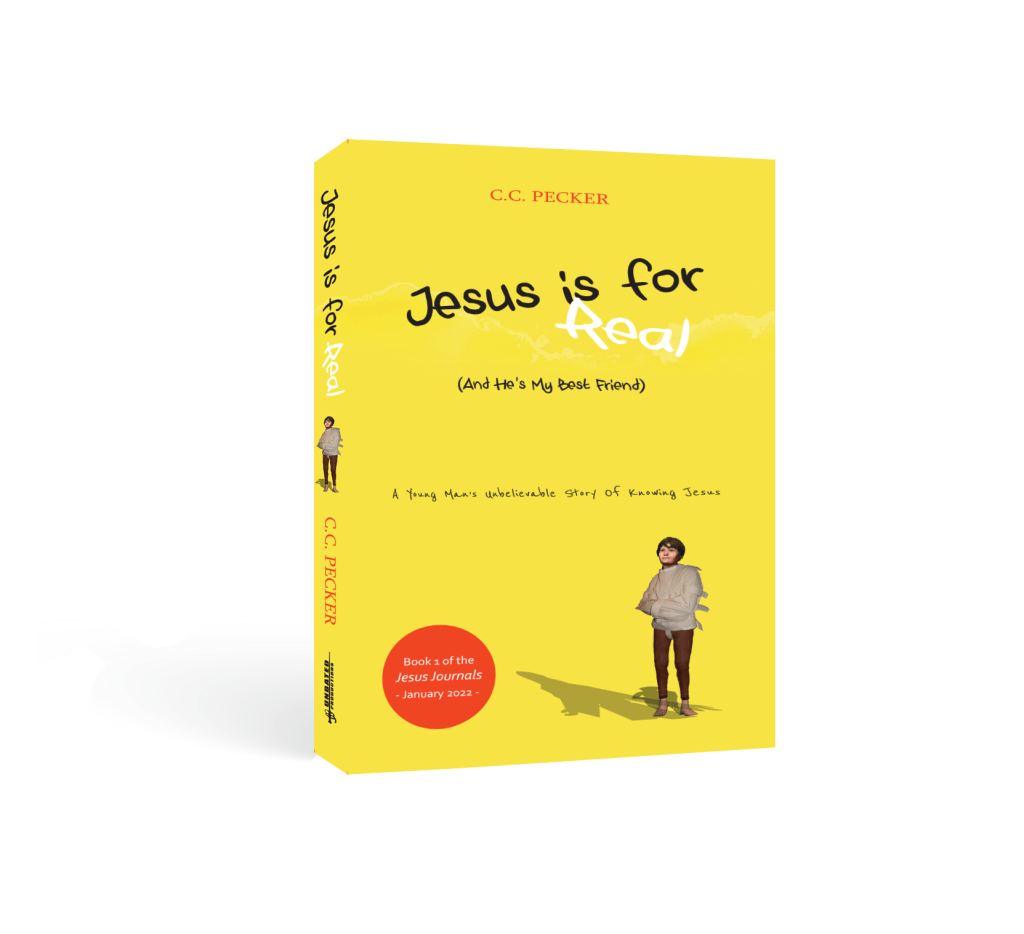



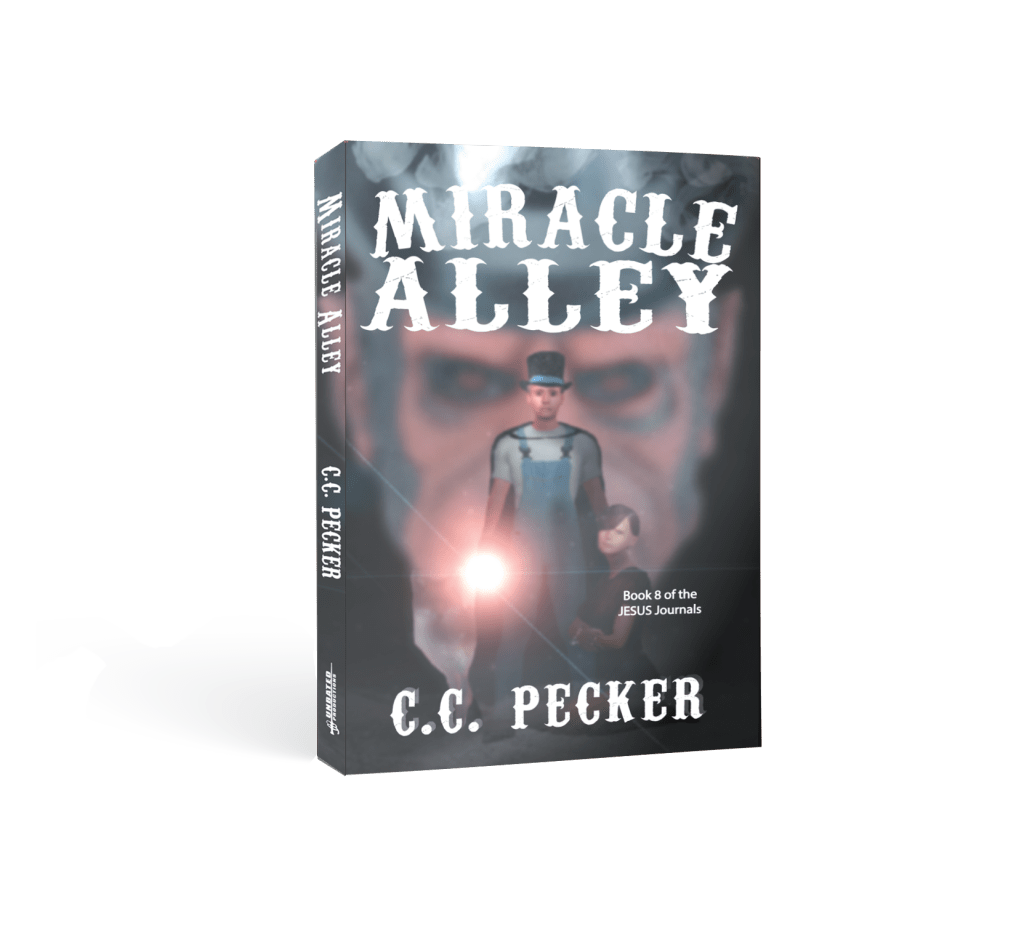

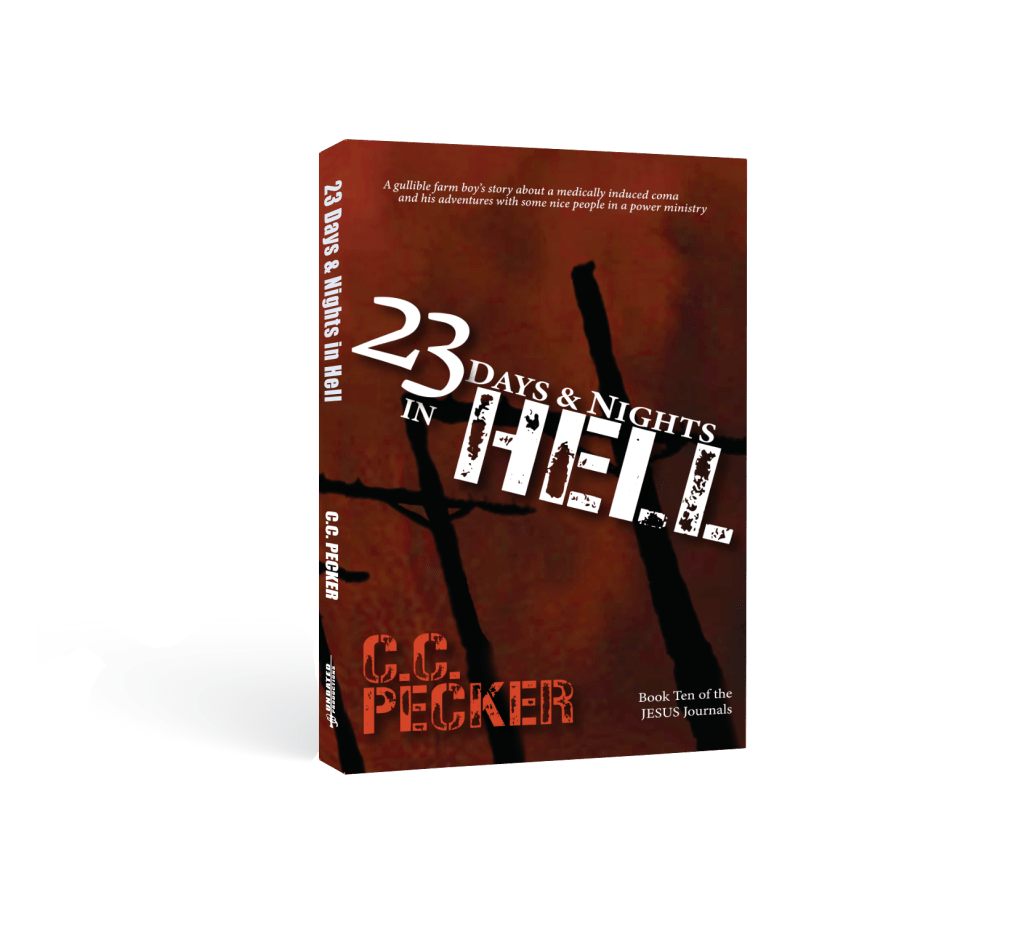


© Copyright UNBATED Productions 2026

