
No Bones Broken for Jesus
Exodus 12:43-46, Numbers 9:12, Psalms 34:20
10/11/26
Since harvest is going smoothly this year, but we work long hours seven days a week, hoping to break even against the tariffs and wars that are inflating prices, we save breakfast Bible study for whenever we can eat. Grace never enjoys the domestic work, but she hates the farming part even more, so every night she tosses a couple of pizzas in the oven when Christian and I finally make it back inside for the day.
“Good,” I said. “I was thinking about a prophecy out on the combine all afternoon.”
“You’re lucky that thing has GPS,” Christian said.
“It doesn’t drive itself,” I said, “but it gives me time to think.”
“About?” Grace asked.
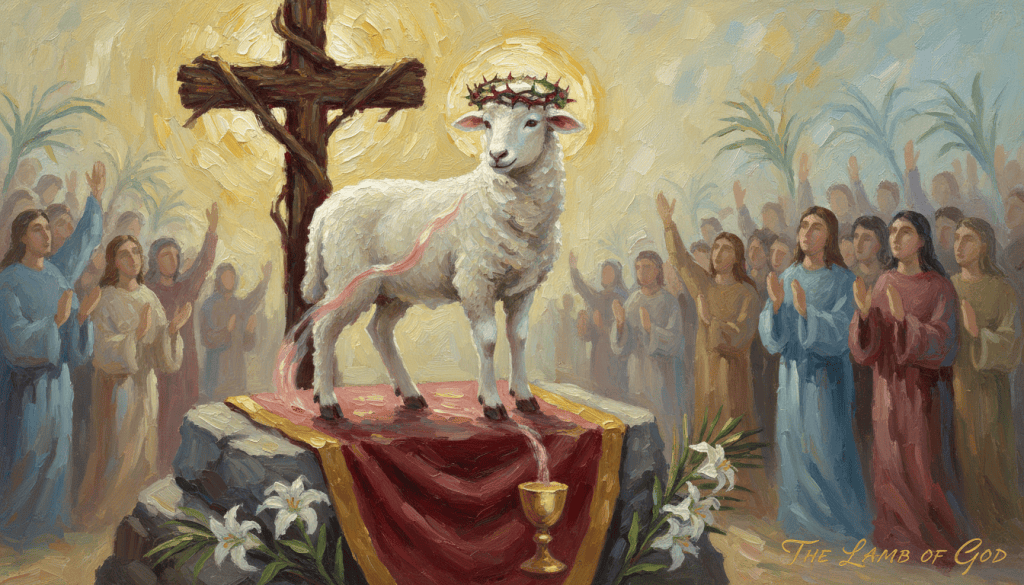
“Jesus as the Passover lamb.”
“Yes,” Christian said. “That was a theme running through the Gospel of John.”
“Because it’s true,” I said. “The Romans didn’t break one of his bones.”
“Anybody X-ray Jesus after he died to be sure?” Christian asked.
“They didn’t have X-rays back then,” I said, “but it was prophesied in Psalm 34 and was part of the Passover rules. The lamb couldn’t have any broken bones.”
“They cooked the lamb whole,” Christian said, “and burned what they couldn’t eat that night. It was a tradition based on ritualistic magic.”
“I don’t like magic,” I said.
“Miracle then,” Grace said. “A miracle involving the death of every Egyptian firstborn male.”
“Oh,” I said, “but that’s how the Israelites became free. They put the blood on their doors so that the angel would know who they were.”
“Because God didn’t have the omniscience to differentiate the people of Israel from Egypt back then?” Christian said.
“He could, but it showed they were following the rules,” I said.
“Okay,” Christian said, “but it’s still a ritual. The angel passed over their homes because of the blood sacrifice. If it were a disease that struck the Egyptian children, they wouldn’t have any broken bones. Broken bones are the product of an uprising. There was no uprising. There was divine intervention. Look at the full ritual. They ate with their staff in hand and their cloaks tucked in their belts. You’d do that if you were getting ready to run…or if you were honoring the escape from Egypt. Whether or not the exodus from Egypt happened, the Passover meal was highly symbolic.”
“See, but in Psalm 34, it also said Jesus would not have any broken bones,” I said.
“Jesus isn’t referenced by name in Psalm 34,” Grace said. “It says God protected the narrator, leaving the narrator without any broken bones. It is hardly accurate to say that Jesus was protected on the cross. Jesus even cries out that he is forsaken.”
“Yes, but the important part is that Jesus died before they could break his legs to kill him by suffocation,” I said.
“Matthew, Mark, and Luke failed to mention that detail,” Christian said. “Only John makes a point of it.”
“Matthew, Mark, and Luke didn’t say the Romans did break his legs,” I said. “Nobody says they did. The evidence is that Jesus broke no bones.”
“That’s true,” Christian said. “I’m tired. What was my point?”
“Where you started,” Grace said. “John the Baptist called Jesus the Lamb of God. That theme runs throughout the Gospel of John, up to the point of Jesus dying on the cross. A similar theme only emerges in the synoptics at the Last Supper, which is a Passover meal. The Lamb of God is not a running motif in the synoptics. The Gospel of John includes the detail of Jesus dying before his bones were broken to compare Jesus to the Passover lamb. Like we’ve discussed, John’s theology is advanced, which is why it swerves so far from the synoptics, I have to believe.”
“I still think it happened,” I said, “and the Romans never broke one of his bones.”
“You may be right,” Christian said. “It was the Jewish leaders who asked that those on the cross be killed before Passover. That might have been a request they truly made, but the Romans didn’t need to acquiesce to them. They might have shown some benevolence to keep the crowd in check, but they wouldn’t have had a problem crushing an angry mob either.”
“I think it was all to fulfill prophecy,” I said.
“That’s because the Gospel of John was well-written,” Grace said. “I’m just surprised that a moment that proved Jesus was the perfect sacrifice, with not one bone broken, was not mentioned by the other Gospel writers.”
“They had other stuff to worry about in those Gospels,” I said.
“Correct. They had different theological perspectives and themes,” Christian said.
“So…I’m right?”
“You are correct that John connected Jesus to the Passover lamb,” Christian said. “It makes sense that his death occurred during Passover, and that might have been enough for the other Gospel writers, but I might argue that Jesus came to Jerusalem and stirred up the sort of trouble that might have gone ignored in Galilee. You don’t execute people for preaching to rural crowds while performing healings. You do execute people, if you are Rome, for causing trouble at the central place of worship for the Israelites and claiming that you will become their king.”
“Oh, it’s like if I held a protest here on the farm, nobody would care, because nobody would see, but if I went to Washington, D.C. to protest, a bunch of people might notice. Jerusalem was like Washington, D.C. Galilee was like here in the Four Corners, where we have way more cows than people.”
“That analogy is…pretty accurate,” Grace said.
“We’re rural just like Galilee. That’s where Jesus should have gone when we were little,” I said. “He should have gone to Washington, D.C., or better yet, to Jerusalem. Instead, he came here and barely anybody noticed.”
“Kind of like what happened two thousand years ago,” Grace said.
“How so?”
“Nobody took enough notice of Jesus to write down all of the miracles that Jesus performed until long after he died,” Grace said.
“Heck, years passed before Paul wrote any of his letters, and he’s short of biographical details regarding Jesus,” Christian said.
“Decades passed before writers recorded the events of Jesus’ life,” Grace said. “When stories spread by word of mouth, they sometimes get exaggerated.”
“How do you know?” I asked.
“I don’t,” Grace said, “but if hundreds of people had risen from the dead in Jerusalem the day Jesus died, you’d think someone would have noticed and written something down. You would think that sort of monumental event would be in all the gospels, but it isn’t. It’s found in one.”
“So you have to ask yourself if that event really happend, and only one gospel writer thought it worthy of mention…or is it just literary invention,” Christian said.
“Or it happened for real…and God only inspired it once because once was enough,” I said.
“Fair enough,” Grace said with her usual sigh.
In state legislatures across the country, Christian fundamentalists are passing laws meant to force the teaching of the Christian Bible in public schools. From the posting of textually inaccurate iterations of the Ten Commandments on the walls of classrooms to the incorporation of the “Trump Bible” across multiple pedagogical disciplines, these laws and mandates are sweeping the reddest parts of this nation.
The height of hypocrisy is banning books in the name of “protecting children” while mandating one particular book rife with numerous acts of sexual violence and scenes of graphic violence and genocide.
Book bans are dangerous. The Bible is worth reading and exists online and in public school libraries across the country, but proponents of mandating its formal teaching in public schools need to know what it actually says.
Some of the biblical themes in the books below might not be appropriate for children.







© Copyright UNBATED Productions 2026

